how-to
A Succession Planting Schedule for a Steady Home Harvest
Last Updated: November 17, 2026
Quick Summary
A succession planting schedule staggers sowings of the same crop at set intervals so harvests overlap instead of arriving at once. Anchor every sowing date to your last spring frost and first fall frost, then space each crop by its own interval, such as lettuce every 2-3 weeks and radishes every 10-14 days.
- Succession planting resows the same crop at intervals; interplanting grows quick crops between slower ones.
- Each crop needs three numbers: planting interval, days to maturity, and harvest window.
- Count backward from your first fall frost for fall crops and forward from last spring frost for summer crops.
- Sow carrots every three weeks and thin hard, because crowded roots twist and fork.
- If weather delays a sowing, shift the remaining sequence by the same number of days rather than skipping.
Table of Contents
- Why a Succession Planting Schedule Beats One Big Planting Day
- The Succession Planting Chart Every Home Garden Needs
- Building Your Succession Planting Schedule by Frost Date
- Succession Planting Examples for Cool and Warm Seasons
- Succession Planting Carrots and Other Root Crops
- Sizing Sowing Intervals to Your Beds, Containers, and Household
- When Weather Breaks the Plan: Adjusting Your Sowing Calendar
- Starting Your Own Garden Calendar in the Herban Root and Remedy Library
- Frequently Asked Questions
Why a Succession Planting Schedule Beats One Big Planting Day
Most home gardeners plant everything in one frantic weekend, then spend August drowning in zucchini and staring at empty beds by September. A succession planting schedule fixes that. It staggers your sowings so something new is always coming ready, and nothing arrives all at once. (Source: local climate, soil, and household size)
At Herban Root and Remedy, we build our seasonal guides around this idea: the garden should feed you steadily, not in one gluttonous week. The Royal Horticultural Society's guide to succession sowing puts it plainly. Small, repeated sowings spread the harvest across months.
The payoff is real and simple:
- No glut of one crop rotting on the counter
- Fresh lettuce in June, July, and September
- Less pressure to preserve everything in a single weekend
- Beds that keep working instead of sitting bare
The Difference Between Succession Planting and Interplanting
Succession planting is sowing the same crop again and again at set intervals so harvests overlap. Interplanting means growing quick crops between slower ones in the same bed at the same time. Both stretch your harvest, but they solve different problems.
Succession planting answers "how do I keep the lettuce coming?" Interplanting answers "how do I use the empty space around my tomatoes?" Most productive gardens use both.
The Succession Planting Chart Every Home Garden Needs
The core of any succession planting chart is three numbers per crop: the planting interval, the days to maturity, and the harvest window. Get those right and the rest is calendar work.
Here is the chart we would start with. Adjust the intervals to your own climate and appetite.
| Crop | Sow Every | Days to Harvest | Harvest Window | Best For |
|---|---|---|---|---|
| Lettuce | 2-3 weeks | 45-60 | Cut-and-come-again | Small beds, containers |
| Radishes | 10-14 days | 25-30 | Short, fast | Quick bed turnover |
| Arugula | 2-3 weeks | 30-40 | Repeat cutting | Cool seasons |
| Beets | 3 weeks | 55-70 | Roots plus greens | Storage and fresh eating |
| Turnips | 2-3 weeks | 40-60 | Roots plus greens | Fall planting |
| Carrots | 3 weeks | 60-75 | Steady pulling | Deep beds |
| Basil | 3-4 weeks | 60-70 | Pinch-and-keep | Warm seasons |
Days to Harvest
Treat this as a starting point, not gospel. Your local climate, soil, and household size will shift the numbers.
Building Your Succession Planting Schedule by Frost Date
The single most useful anchor for a succession planting schedule by frost date is your local last spring frost and first fall frost. Every sowing date hangs off those two markers.
Count backward from your first fall frost for fall crops. Count forward from your last spring frost for summer crops. Everything in between gets spaced by the intervals in the chart above.
Working Out Your First and Last Frost Dates
Your frost dates come from your local climate, not a national average. A few reliable ways to find them:
- Ask your nearest extension office for your average frost dates
- Check a regional gardening calendar for your zone
- Track your own last and first frosts for two or three years
Once you have both dates, sketch your season on paper. Mark the frost dates, then work outward. New to the whole process? Our guide on how to start a vegetable garden for beginners walks through bed setup before you plan a single sowing.
For a full month-by-month anchor, the seven monthly garden tasks for beginners pairs well with your frost-date math.
Succession Planting Examples for Cool and Warm Seasons
A cool-season succession plan and a warm-season one run on different clocks. Cool-season crops tolerate frost and bolt when heat arrives, so their intervals are short and front-loaded. Warm-season crops do poorly in cold soil, so their successions start later and stretch into summer.
Cool-season succession examples (anchor: last spring frost and first fall frost):
- Lettuce sown every 2 weeks from about 4 weeks before last frost through early summer, then again from late summer to early fall
- Radishes every 10 days for a constant salad supply; they mature in 25-30 days, so three sowings can fit in one cool window
- Arugula and spinach every 2-3 weeks for repeat cuttings, stopping when daytime heat pushes them to bolt
- Fall turnips and beets timed backward from first fall frost: count back 60-70 days for beets, 40-60 for turnips
Warm-season succession examples (anchor: soil temperature and last frost):
- Basil sown in waves every 3-4 weeks once nights stay above 50°F; pinch tips to delay flowering and keep leaves coming
- Bush beans replanted every 3 weeks through midsummer; they mature in about 50-60 days, so the last sowing must land 60 days before first fall frost
- Carrots sown every 3 weeks through summer, with the final sowing timed to finish before hard frost
- A late sowing of quick crops like radishes or baby greens before fall closes in
The trick is overlap. Your last cool-season sowing and your first warm-season sowing should nearly touch, so beds never go quiet. A common pattern is to sow lettuce and radishes in the same bed, harvest the radishes first, then transplant basil or beans into the gap. That handoff is where succession planting and interplanting meet.
Watch out: cool-season crops sown too late in spring will bolt before they size up, and warm-season crops sown too early in cold soil will rot or stall. Use soil temperature as your gate, not the calendar alone.
Succession Planting Carrots and Other Root Crops
Root crops reward patience and punish crowding. Succession planting carrots works best with small, frequent sowings rather than one long row, because carrots store poorly in the ground once they size up and split.
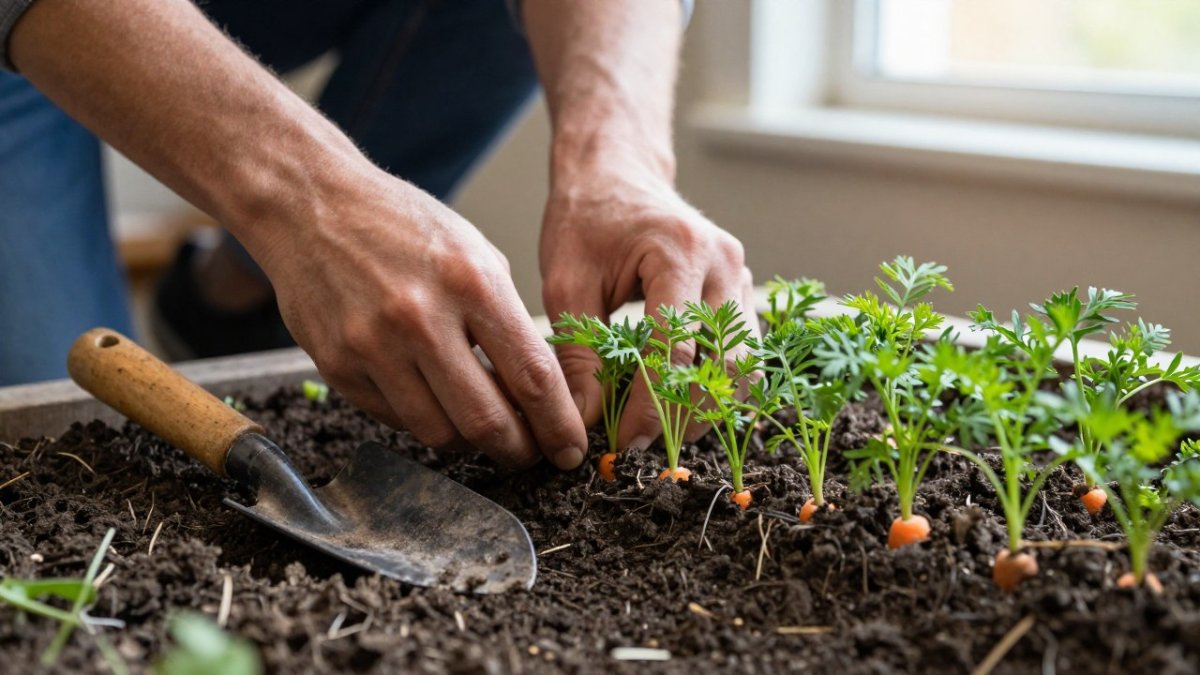
Sow carrots every three weeks from early spring through midsummer. Thin them hard, because crowded roots twist and fork. Beets, turnips, and radishes follow the same logic: short intervals, steady harvests, no waste.
A common mistake is sowing root crops too thickly and skipping the thinning. Thin seedlings early and you get clean, straight roots instead of a tangled mess.
Sizing Sowing Intervals to Your Beds, Containers, and Household
The right interval depends on how much you actually eat and how much space you have. A household of two does not need a full row of lettuce every fortnight.
Start with what you consume in a week. Then work backward to seed quantity. Small beds and containers suit tight intervals of fast crops. Larger plots can carry longer gaps between slower, bigger crops.
Here is how we would think about it:
- Balcony or containers: lettuce, radishes, and herbs on short intervals
- Small raised beds: mix quick crops with a few slower ones
- Larger plots: longer intervals, bigger harvests, more storage crops
The goal is a continuous harvest that matches your kitchen, not a competition with your neighbor. Our guide to harvesting habits that boost your vegetable yields shows how picking at the right moment keeps each succession productive.
When Weather Breaks the Plan: Adjusting Your Sowing Calendar
Weather will wreck your schedule at some point. A late frost, a heat spike, or a soggy week throws off every sowing date you carefully planned.
Frost and cold snaps: If a late frost threatens, hold warm-season sowings by 7-10 days rather than canceling them. Cool-season crops already in the ground usually shrug off a light frost; floating row cover buys a few degrees and a few days. Do not sow warm-season seed into soil below about 50°F, because germination stalls and seed rots.
Heat spikes: When daytime heat arrives early, cool-season crops bolt and turn bitter. Shift to faster cool-season crops, sow them in partial shade, or pause that succession and resume in late summer.
Rain and soggy soil: Sowing into cold, wet soil is the fastest way to rot seed and lose a whole interval. Wait for the soil to warm and dry before you sow again.
Delayed germination: If a sowing comes up patchy, do not immediately resow the whole row.
Pest and disease buildup:
Overlapping harvests: If two intervals mature at once because of a warm spell, harvest the faster crop first and preserve or share the surplus. Then reset the interval from the actual harvest date rather than the original sowing date.
When outdoor sowing stalls, bring the plan indoors. Our guide on growing herbs indoors in winter keeps your supply going when the garden is buried under frost.
Starting Your Own Garden Calendar in the Herban Root and Remedy Library
A succession planting schedule only earns its keep when it lives somewhere you actually use it. That is the idea behind our seasonal guides and planting calendars.
Herban Root and Remedy is a private, ad-free digital resource built from hand-annotated field journals and recipe cards. It holds hundreds of tested recipes and practical guides across gardening, scratch-made cooking, food preservation, and natural apothecary. No ads and no tracking. Knowledge passed between generations, ready to use.
You get seasonal guides and planting calendars you can shape around your own frost dates, beds, and household.
Your garden does not need to be big or complicated to feed you steadily. It needs a plan that staggers the harvest and adjusts when the weather turns. Herban Root and Remedy gives you the planting calendars, seasonal guides, and tested recipes to build that plan and use every bit of what you grow. Get started with Herban Root and Remedy and turn one planting day into a whole season of harvests.
Frequently Asked Questions
How often should you succession plant vegetables?
The interval depends on how fast the crop matures and how much you can eat at once. Fast crops like radishes, arugula, and leaf lettuce are usually sown every 10 to 14 days. Beets, turnips, and bush beans go in every two to three weeks. Carrots sit somewhere in the middle at roughly three weeks. The aim is a steady trickle rather than a glut: work backwards from your harvest window and stagger each sowing so the last one finishes before your first frost date.
How do frost dates affect a succession planting schedule?
Your first and last frost dates set the outer edges of the growing season, and every sowing date is calculated from them. Cool-season crops go in a few weeks before the last spring frost and again in late summer counted back from the first autumn frost. Warm-season crops wait until soil has warmed after the last frost. Once you know both dates, you can count backwards from days to maturity to see whether a late sowing will actually ripen before cold arrives.
Can you succession plant carrots, lettuce, and beans together?
Yes, and they work well as a trio because they mature at different speeds. Lettuce is the quickest, ready in roughly 30 to 60 days depending on variety, so it fills gaps early. Carrots take longer, often 60 to 80 days, so start them earlier and sow in smaller batches. Bush beans crop in about 50 to 60 days and can follow an early lettuce harvest in the same bed. Keep each crop in its own block or row so you can clear and replant one without disturbing the others.
What is the difference between succession planting and interplanting?
Succession planting is about time: you sow the same crop repeatedly through the season, or follow one crop with another as soon as a bed empties. Interplanting is about space: you grow two crops together in the same bed at the same time, usually pairing a fast crop with a slow one. Many home gardeners use both. A bed might hold radishes between slow-growing brassicas while the gardener also sows a fresh row of radishes every fortnight elsewhere.
