listicle
What Are the Best Vegetables to Grow in a Small Garden?
Last Updated: October 26, 2026
Quick Summary
The best vegetables to grow in a small garden are leafy greens, cherry tomatoes, bush beans, radishes, and dwarf peas, chosen for high yield per square foot and compact growth. Match each crop to your sun, space, and what you actually eat, and skip sprawling types that waste room.
- Walk your space at three points in the day and note where the sun lands before buying seeds.
- Sow a small pinch of lettuce every two to three weeks for a continuous supply.
- Shallow-rooted greens thrive in 6-8 inch deep containers; fruiting crops need 12 inches and 5 gallons or more.
- Pole beans, peas, cucumbers, and vining tomatoes grow upward and free ground for low crops.
- In partial shade, leafy greens give tenderer leaves and bolt more slowly, but grow more slowly.
Table of Contents
- Start With Space, Light, and What You Actually Eat
- 1. Leafy Greens and Salad Crops: Fast, Compact, and Cut-and-Come-Again
- 2. Cherry Tomatoes and Dwarf Fruiting Crops for Small Spaces
- 3. Bush Beans, Peas, and Root Crops That Earn Their Footprint
- Easy Vegetables to Grow for Beginners (and Why They Forgive Mistakes)
- Vegetables to Grow in Containers When You Have No Bed at All
- Best Vegetables for Vertical Gardening: Grow Up, Not Out
- Vegetables That Grow in Shade: What Still Crops in Less Sun
- Frequently Asked Questions
Start With Space, Light, and What You Actually Eat
Tomatoes show up in 86% of food gardens, according to [RubyHome's gardening statistics](https://www.rubyhome.com/blog/gardening-stats/), yet most small-garden growers waste their first season on crops that never earn the space. Choosing the best vegetables to grow in a small garden comes down to three things: how much sun the spot gets, how much room each plant needs, and what your household will actually eat. A garden that feeds you beats one that just looks tidy.
Here is the key insight most guides bury: a small garden is not a scaled-down farm. It is a high-density selection problem. You are picking a handful of crops that produce the most food per square foot, and skipping everything that sprawls.
Match the Crop to the Spot You Have
Before you buy a single seed packet, walk your space at three points in the day and note where the sun lands. Most fruiting crops want full sun, while leafy greens tolerate less. Rutgers lists container-suitable options including bush beans, beets, carrots, cucumbers, lettuce, green onions, peppers, radishes, Swiss chard, and dwarf tomatoes, which tells you how wide the choice is even on a patio.
If you are brand new to this, our guide on how to start a vegetable garden for beginners can help you build on the crop list below.
1. Leafy Greens and Salad Crops: Fast, Compact, and Cut-and-Come-Again
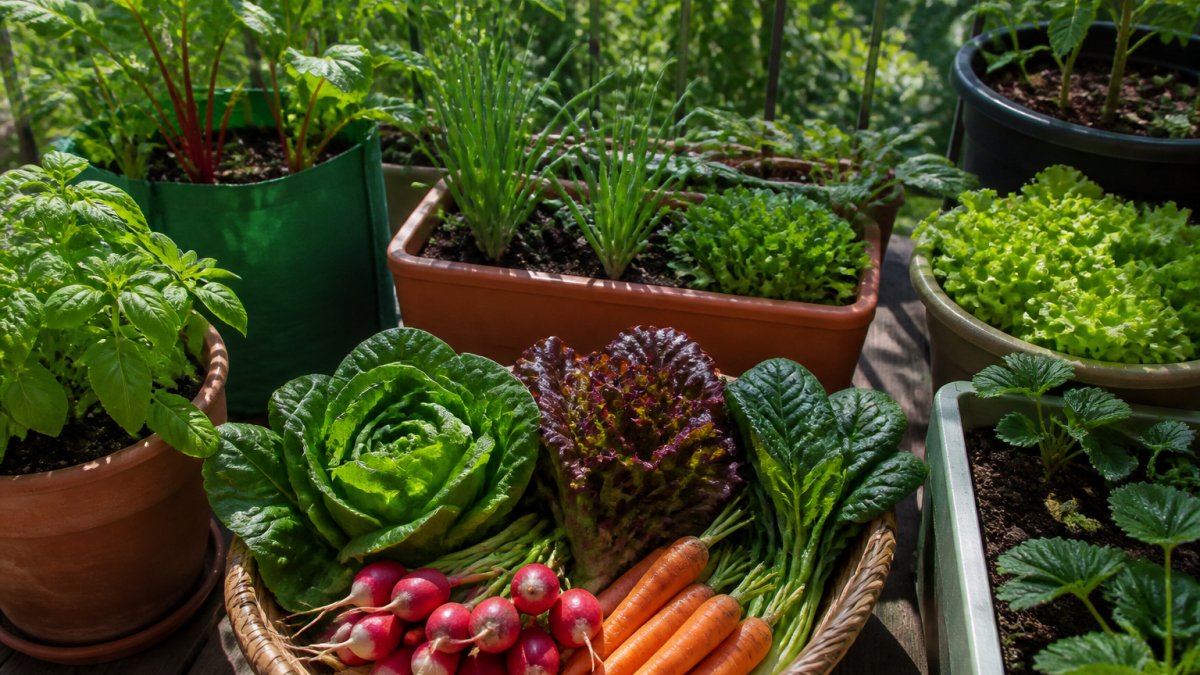
Salad crops give you the fastest return of anything in a small garden. Lettuce, rocket, kale, mizuna, tatsoi, and mustard greens all fit into tight beds, and most let you harvest outer leaves while the plant keeps growing. That cut-and-come-again habit is why leafy greens beat almost everything on yield per square foot.
Penn State PlantVillage identifies lettuce and spinach as leafy vegetables that grow easily in small spaces. Sow a small pinch every two to three weeks through the season and you keep a continuous supply instead of one glut.
- Lettuce: quick to mature, ideal for succession sowing
- Rocket and mizuna: fast, peppery, and happy in partial shade
- Kale and Swiss chard: keep producing over a long season
- Spinach: best sown early while the weather is still cool
Watch out: slugs and snails do their worst damage on leafy greens in damp, crowded beds, so leave breathing room between plants and check under leaves in the evening.
2. Cherry Tomatoes and Dwarf Fruiting Crops for Small Spaces
Cherry tomatoes are the small-garden fruiting crop that earns its place. Compact and dwarf varieties stay manageable in a pot or at the back of a bed, and one healthy plant keeps fruiting for months. Peppers and eggplants follow the same rule: choose compact varieties, not the sprawling field types.
The trick with tomatoes is support and airflow. A determinate tomato grows to a set height and ripens its crop together, which suits a small space better than an endless vine. Feed regularly, water at the base, and pinch out side shoots on cordon types to keep them tidy.
3. Bush Beans, Peas, and Root Crops That Earn Their Footprint
Bush beans, peas, and root crops fill the gaps that leafy greens and tomatoes leave behind. Bush green beans are described as productive and easy to grow for new gardeners, and dwarf pea varieties like Tom Thumb keep the harvest within arm's reach. Carrots, radishes, and beets grow down rather than out, so they slot into narrow beds and containers.
| Crop | Space Style | Why It Works Small | Watch For |
|---|---|---|---|
| Bush beans | Compact bush | Productive, no support needed | Pick often to keep cropping |
| Dwarf peas | Short vines | Fits pots and edges | Needs a little support or netting |
| Carrots | Deep, narrow | Uses vertical soil space | Loose, stone-free soil |
| Radishes | Very fast | Quick turnaround between crops | Bolts in heat |
| Beets | Compact roots | Leaf and root both edible | Thin seedlings early |
Succession planting is where these crops pay off. Sow a short row of radishes or carrots every few weeks and you harvest steadily rather than all at once.
Easy Vegetables to Grow for Beginners (and Why They Forgive Mistakes)
The easiest vegetables to grow for beginners are the ones that shrug off irregular watering and a late start. Lettuce, bush beans, radishes, and Swiss chard top that list because they germinate reliably and mature fast. A beginner who plants these in spring gets a harvest before doubt sets in.
What most guides miss is that forgiving crops still need the basics done right: decent soil, consistent moisture, and enough light. Get those three right and beginner gardening stops feeling intimidating. If you want a month-by-month rhythm to follow, our year-round guide to monthly garden tasks is available.
Vegetables to Grow in Containers When You Have No Bed at All
Container gardening opens the door for anyone with a balcony, step, or windowsill, but the difference between a thriving pot and a disappointing one comes down to matching crop to container volume. Most guides say "use a big pot" and stop there.
A common pattern among experienced container growers is that root depth and plant size dictate pot size more than anything else.
| Crop | Minimum container volume | Soil depth needed | Spacing per pot | Support needs |
|---|---|---|---|---|
| Lettuce | 1-2 gallons | 6-8 inches | 6-8 inches apart | None |
| Radishes | 1-2 gallons | 6 inches | 2-3 inches apart | None |
| Bush beans | 3-5 gallons | 8-10 inches | 4-6 inches apart | None, but a small stake helps |
| Dwarf cherry tomatoes | 5-10 gallons | 12+ inches | 1 plant per pot | Stake or cage |
| Peppers | 3-5 gallons | 10-12 inches | 1 plant per pot | Stake |
| Cucumbers (bush type) | 5 gallons | 12 inches | 1 plant per pot | Small trellis |
Size matters more than most people expect. A tiny pot dries out fast and starves roots, so choose the largest container your space allows and make sure it drains freely. Use a quality potting mix rather than garden soil, which compacts in pots and holds too much water.
Watering is the other container-specific skill. Pots dry from the sides and bottom, so check moisture by weight or with a finger test rather than a fixed schedule. In hot weather, a 5-gallon tomato pot may need water daily.
Herbs deserve a spot on that balcony too. If you want to keep a supply going through the cold months, our guide on growing herbs indoors in winter is available. Oregano is a particularly good container herb, and our notes on growing oregano are available.
Best Vegetables for Vertical Gardening: Grow Up, Not Out
The best vegetables for vertical gardening are the climbing and vining types that turn a fence or trellis into extra growing space. Pole beans, peas, cucumbers, and vining tomatoes all grow upward, freeing ground for low crops beneath them. Food Garden Life notes that peas, beans, tomatoes, and squash come in vining and bush forms, so you can pick the habit that fits your frame.
Support structures do the heavy lifting. A simple trellis, netting, or a sturdy cane wigwam is enough for most climbing crops. Train stems early, tie loosely, and keep the base clear so air moves through the plants.
- Pole beans: heavy croppers on a tall frame
- Peas: early season climbers on netting
- Cucumbers: happy up a trellis in a warm spot
- Vining tomatoes: tie in and pinch out as they climb
Vegetables That Grow in Shade: What Still Crops in Less Sun
Shade-tolerant vegetables keep a dim corner productive when full-sun crops would sulk, but "shade" is not one condition. A spot that gets three hours of morning sun is very different from one that never sees direct light.
A practical way to think about it is by light level. Full sun means six or more hours of direct light (Shade Gardening Tips and Plant Ideas). Partial shade means three to six hours, often split between morning and late afternoon. Deep shade means less than three hours or only dappled light all day.
| Crop | Light tolerance | What to expect in partial shade | Key trade-off |
|---|---|---|---|
| Lettuce | Partial shade to full sun | Slower growth, tender leaves, less bolting | Smaller heads but longer harvest window |
| Spinach | Partial shade | Good leaf production in cool weather | Bolts quickly if shade turns to heat |
| Rocket | Partial shade | Steady supply of peppery leaves | Slower to regrow after cutting |
| Kale | Partial shade | Sturdy leaves, slower maturity | Longer time to first harvest |
| Swiss chard | Partial shade | Reliable leaf crop | Less vigorous than in full sun |
| Radishes | Partial shade | Small but usable roots | Slower bulbing, smaller size |
| Beets | Partial shade | Edible leaves and small roots | Roots stay small |
Leafy greens lead the list because they are harvested for foliage rather than fruit. In partial shade they often produce tenderer leaves and bolt more slowly than in full sun, which extends the harvest window. The trade-off is speed: plants grow more slowly, so succession sowings need to be spaced a little further apart in time.
The honest limitation is that fruiting crops need sun to ripen. Tomatoes, peppers, and eggplants will grow in shade but rarely reward you with much fruit. Put your best light into those and save the dim spots for leaves and roots.
Shade also changes watering and pest pressure. Soil stays cooler and wetter longer, which suits leafy greens but can encourage slugs and snails. Leave space between plants for airflow and check under leaves in the evening. A shady spot can still hold a useful, fragrant plant. Our guide on growing lavender is available.
Frequently Asked Questions
Which vegetables are the easiest to grow in a small garden?
Lettuce, bush green beans, and cherry tomatoes are options to consider. Add radishes and peas. Start with three or four crops rather than ten.
What vegetables can you grow in containers on a balcony?
Rutgers lists bush beans, beets, carrots, cucumbers, lettuce, green onions, peppers, radishes, Swiss chard, and dwarf tomatoes as container-suitable.
Which vegetables grow well in partial shade?
Leafy crops handle less sun better than fruiting ones. Lettuce, spinach, kale, rocket, mizuna, tatsoi, and mustard greens are the safest choices where you get a few hours of direct light rather than a full day. Root crops like carrots and beets will grow in light shade but size up more slowly. Keep fruiting crops such as tomatoes, peppers, and eggplants in the sunniest spot you have, since shade cuts flowering and yield.
How do you get more vegetables from a small garden?
Plant densely with crops that earn their space, then replant the gaps. Succession planting keeps a bed producing: sow lettuce every few weeks instead of all at once, and follow an early pea crop with beans. Choose compact and dwarf varieties over full-size ones, train climbers up supports, and harvest cut-and-come-again greens regularly so they keep leafing. Track what each crop actually gave you, then drop the ones that did not pay.
A small garden rewards planning over planting volume, and the hardest part is knowing which crops to sow when. Herban Root and Remedy gives you seasonal guides and planting calendars, hundreds of tested recipes, and practical guides across gardening, cooking, preservation, and natural apothecary, all in an ad-free, private space built on hand-annotated field journals passed between generations. Get started with Herban Root and Remedy and grow food that fits the space you actually have.
