how-to
Frost Dates for Vegetable Gardening: A Planting Calendar Guide
Last Updated: November 22, 2026
Quick Summary
Frost dates are the average dates of the last spring frost and first fall frost in your area, and they set the outer edges of your growing season. Treat them as guidance rather than certainty, since a frost date is an average that marks the middle of a range of possible dates, not a promise.
- Frost can form when air near the ground drops to around 36°F, while a freeze means 32°F or below.
- Find your dates with an online calculator using your ZIP code, then check which weather station it used.
- Many calculators report 10, 50, and 90 percent thresholds; the 50 percent date is the median.
- Add a buffer of one to two weeks before setting out tender crops to cover later frosts.
- Cold air drains downhill and pools in low spots, so a garden at the bottom of a slope frosts earlier.
Table of Contents
- What Frost Dates Mean for Your Vegetable Garden
- How to Find Your Last Frost Date by ZIP Code
- Historical Last Frost Dates by ZIP Code: Why Averages Hide the Risk
- Turn Your Dates Into a Vegetable Planting Calendar by Frost Date
- Adjusting for Microclimates: Why Your Neighbor's Garden Isn't Yours
- Vegetables to Plant in July: Using Your First Fall Frost Date
- Protecting Plants When Frost Arrives Unexpectedly
- Building Your Own Frost-Date Planting Plan in Herban Root and Remedy
- Frequently Asked Questions
What Frost Dates Mean for Your Vegetable Garden
Frost dates for vegetable gardening are the average dates of the last spring frost and the first fall frost in your area, and they set the outer edges of your growing season. Get them wrong and a single cold night undoes weeks of work. (Source: NOAA's Climate Data Online portal)
Frost is generally associated with temperatures around 36°F, according to EXTERNAL_LINK: My Northern Garden's frost date guide | mynortherngarden.com. That number surprises people. You do not need a hard freeze to lose tender seedlings.
Frost dates are the backbone of most planting plans. They tell you when to start seeds indoors, when to move plants outside, and when to expect the season to close.
Here is the part most guides skip: a frost date is an average, not a promise. It marks the middle of a range of possible dates, not a wall.
Frost Date vs. Freeze Date: Why the Difference Matters
A frost date and a freeze date are not the same thing. Frost can form when air near the ground drops to around 36°F, while a freeze involves temperatures at or below 32°F for long enough to damage plant tissue.
That gap matters. A light frost may only nip the tips of tender plants. A hard freeze can kill them outright.
So when you read a frost date, ask which threshold it uses. A date built on a light-frost threshold will land later than one built on a hard-freeze threshold.
How to Find Your Last Frost Date by ZIP Code
The fastest way to find your last frost date by ZIP code is to use an online frost date calculator that pulls historical weather records for the station nearest your address. These tools return an average last spring frost and an average first fall frost in seconds, but the number you get is only the starting point. The real skill is reading what that number means and adjusting it for your own ground.
Here is how we would do it:
- Enter your ZIP code into a frost date calculator
- Note the average last spring frost and average first fall frost
- Check which weather station the tool used, and confirm it sits close to your garden and at a similar elevation
- Write both dates down where you will see them, then add your site adjustment (covered below)
The Old Farmer's Almanac frost date calculator(https://www.almanac.com/gardening/frostdates) is one widely used option, and it bases results on nearby official weather data. A countywide date may still not fit your garden. UC Agriculture and Natural Resources notes that its Santa Clara County frost dates are approximate and depend on location, which is a polite way of saying a single ZIP code can hide several different microclimates.
Reading the Probability Behind a Frost Date
A frost date usually carries a probability behind it. A "last frost date" is often the date after which frost has occurred in only a small share of past years, not a date when frost becomes impossible.
That distinction changes how you use the number. If you plant tender crops right on the 50 percent date, you are planting into real risk.
Watch out: a calculator that shows only one date without stating its probability is giving you a number you cannot properly weigh. Look for the threshold, or ask which one the tool uses.
Treat frost dates as guidance, not certainty, and pair them with your own site adjustment before you set out a single seedling.
Adjusting the ZIP Result for Your Actual Garden
Once you have the probability-adjusted date, shift it for your site. Cold air behaves like water: it drains downhill and pools in low spots. A garden at the bottom of a slope can frost a week or more later in spring than a bed halfway up the same hill. A south-facing wall or a bed next to a stone patio holds daytime heat and can push your effective last frost earlier by several days.
A practical pattern is to walk your land on a clear, still morning after a cold night and note where frost lingers longest. Those are your cold pockets. Plant tender crops there last, or reserve them for frost-hardy vegetables. For a full walk-through of the whole season, our beginner's guide to starting a vegetable garden pairs well with this calendar.
Historical Last Frost Dates by ZIP Code: Why Averages Hide the Risk
Historical last frost dates by ZIP code are averages drawn from many years of records, and averages hide the outliers. Your area might average a last frost in mid-May but still see frost in early June in an odd year.
That is the trap. Gardeners who plant on the average date get burned roughly half the time, because half of all years had frost later than the average.
We plan for the later end of the range. Look up your date, then add a buffer of one to two weeks before setting out tender crops. It costs you a little time in spring and saves you a whole replant.
Turn Your Dates Into a Vegetable Planting Calendar by Frost Date
A vegetable planting calendar by frost date works backward from your last spring frost and forward from your first fall frost. Every crop gets a countdown, and every task gets a date.
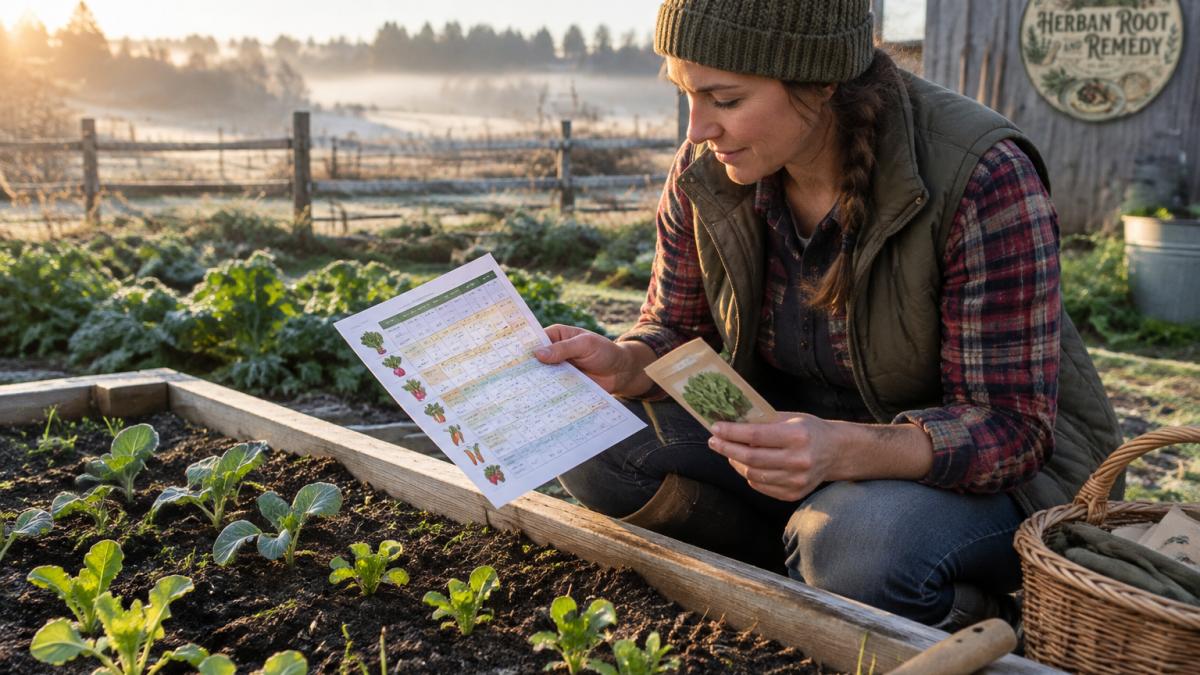
Here is the framework we use:
| Task | Timing | Example |
|---|---|---|
| Start cool-season seeds indoors | 6-8 weeks before last frost | Broccoli, cabbage |
| Direct sow frost-tolerant crops | 2-4 weeks before last frost | Peas, spinach, radishes |
| Transplant warm-season starts | 1-2 weeks after last frost | Tomatoes, peppers |
| Direct sow tender crops | After last frost date | Beans, corn, squash |
| Plant fall crops | 8-10 weeks before first fall frost | Kale, turnips |
For a full walk-through of the whole season, our beginner's guide to starting a vegetable garden pairs well with this calendar.
Cool-Season and Warm-Season Crops: Two Different Countdowns
Cool-season crops tolerate cold and can go out before your last frost. Think peas, lettuce, spinach, radishes, broccoli, and kale. They grow best in the cool weeks of spring and again in fall.
Warm-season crops need warm soil and no frost risk. Tomatoes, peppers, cucumbers, squash, and beans all fall here. Set them out too early and cold soil stalls them or frost kills them.
If you want to grow tomatoes from seed, our guide to starting tomatoes from seed walks through the indoor timing that lines up with your last frost date.
Adjusting for Microclimates: Why Your Neighbor's Garden Isn't Yours
A microclimate is the local set of conditions in one specific spot, and it can shift your real frost date by a week or more. Your neighbor's garden may sit a few degrees warmer or colder than yours.
What creates a microclimate:
- Elevation and slope, since cold air drains downhill
- Proximity to buildings, walls, or water that hold heat
- Soil type, because sandy soil warms faster than clay
- Wind exposure and shade throughout the day
A garden at the bottom of a slope collects cold air and frosts earlier. A bed against a south-facing wall stays warmer. Walk your land in early morning and note where frost lingers.
Vegetables to Plant in July: Using Your First Fall Frost Date
Vegetables to plant in July are the ones that will mature before your first fall frost, so count backward from that date. If your first fall frost lands in early October, you need crops that finish in roughly 60 to 75 days.
Good July choices include:
- Fast brassicas like kale, bok choy, and radishes
- Beets and carrots for a fall harvest
- Bush beans, if your season runs long enough
- Fall lettuce and spinach for cool-weather greens
Check the days-to-maturity on each seed packet and add a buffer for slowing light. Once your crops are growing, our guide to harvesting habits that boost vegetable yields helps you get the most from the late-season beds.
Protecting Plants When Frost Arrives Unexpectedly
Frost protection comes down to trapping warmth and blocking cold air, and a few simple tools do most of the work. An unexpected frost warning does not have to mean a lost crop.
What works:
- Row covers or old sheets draped over plants at dusk
- Cloches or plastic jugs with the bottoms cut off
- Deep watering the day before, since wet soil holds heat
- Moving potted plants against a warm wall or indoors
- Harvesting anything ready before the cold hits
Watch out: never leave plastic sheeting touching plant leaves. Plastic transfers cold directly to the tissue and can damage plants worse than bare air.
Building Your Own Frost-Date Planting Plan in Herban Root and Remedy
Your frost-date plan only pays off if you can find it when you need it. That is where Herban Root and Remedy comes in.
The platform is built from hand-annotated field journals and recipe cards passed down through generations.
The natural living guides walk you through the homesteading methods behind each season, step by step. There are no ads and no tracking, just the knowledge.
If you are new and feeling unsure, start with the basics.
Frost dates are estimates, and that is exactly why a written plan beats memory. Build your calendar around your own dates, adjust for your microclimate, and keep a frost cover within reach.
Herban Root and Remedy gives you a private, ad-free home for that plan, with seasonal guides, planting calendars, and hundreds of tested recipes and methods across gardening, cooking, preservation, and natural apothecary.
Frequently Asked Questions
How do I find my last frost date by ZIP code?
Use a frost-date calculator that asks for your ZIP code, city, and state, then returns an average last spring frost and first fall frost. Treat the result as planning guidance, not a guarantee: average dates are estimates, and a countywide figure may not match every garden in that county. Write the date down, then adjust it for your own site using the microclimate notes in this guide.
How accurate are average first and last frost dates?
They are averages, not promises. Frost-date systems are not perfect and should guide planning rather than certainty. Your actual last frost can arrive earlier or later than the average, which is why the probability behind the date matters. Check historical last frost dates by ZIP code, note how often frost has landed after the average, and keep row cover or cloches on hand for tender plants in the first weeks after you plant out.
What is the difference between a frost date and a freeze date?
A frost date usually refers to the first or last time temperatures are expected to reach the frost threshold in a season. Frost is commonly associated with temperatures around 36°F, while a hard freeze is colder. A hard freeze is colder and kills tender growth outright. For vegetable gardening, use the frost date to time planting and the freeze risk to decide when to harvest or protect.
Are there vegetables I can plant in July?
Yes, if you count backward from your first fall frost. Fast cool-season crops can often be direct sown in July for a fall harvest, depending on your region and season length. Check the days to maturity on each packet, add a buffer of a week or two, and aim to finish before your average first fall frost.
