how-to
5 Organic Fertilizer Mistakes Killing Your Vegetable Garden
Last Updated: October 25, 2026
Quick Summary
Organic fertilizer vegetables thrive in works with your soil's natural biology, building long-term fertility rather than delivering a quick nutrient hit that fades fast. A soil test reveals what your garden actually needs, preventing costly mistakes and nutrient imbalances that reduce yields.
- Get a soil test before applying any fertilizer to identify actual deficiencies and avoid over-application.
- Match fertilizer type and timing to each crop's growth stage: nitrogen for leafy growth, phosphorus and potassium for flowering and fruiting.
- Apply well-rotted manure only, stopping at least 90 days before harvesting leafy greens or root vegetables eaten raw.
- Build soil health by adding compost every season; rich soil reduces the need for supplemental fertilizer over time.
- Heavy feeders like tomatoes need side-dressing every 3-4 weeks, while leafy greens need feeding every 2-3 weeks during active harvest.
Table of Contents
- Why Organic Fertilizer for Home Vegetable Gardens Matters
- Best Organic Fertilizer for Vegetables: Plant-Based vs Animal-Based Sources
- How to Fertilize a Vegetable Garden Using Soil Test Results
- When to Fertilize Vegetable Plants: Timing and Growing Season Strategy
- Homemade Fertilizer for Vegetable Garden: Rice Water, Eggshells, and Banana Peels
- Five Mistakes That Undermine Vegetable Yields
- Building Soil Health Through Organic Matter and Compost
- Start Your Organic Vegetable Garden with Tested Guidance
- Frequently Asked Questions
Why Organic Fertilizer for Home Vegetable Gardens Matters
Growing your own vegetables means you control what goes into the soil and onto your family's table.
At Herban Root and Remedy, we've watched countless gardeners struggle because they fertilize without understanding what their soil needs.
The difference between a thriving garden and a struggling one often comes down to this: are you feeding the plant, or the soil? With organic fertilizer for vegetables, you're doing both, but only if you're doing it right.
Best Organic Fertilizer for Vegetables: Plant-Based vs Animal-Based Sources
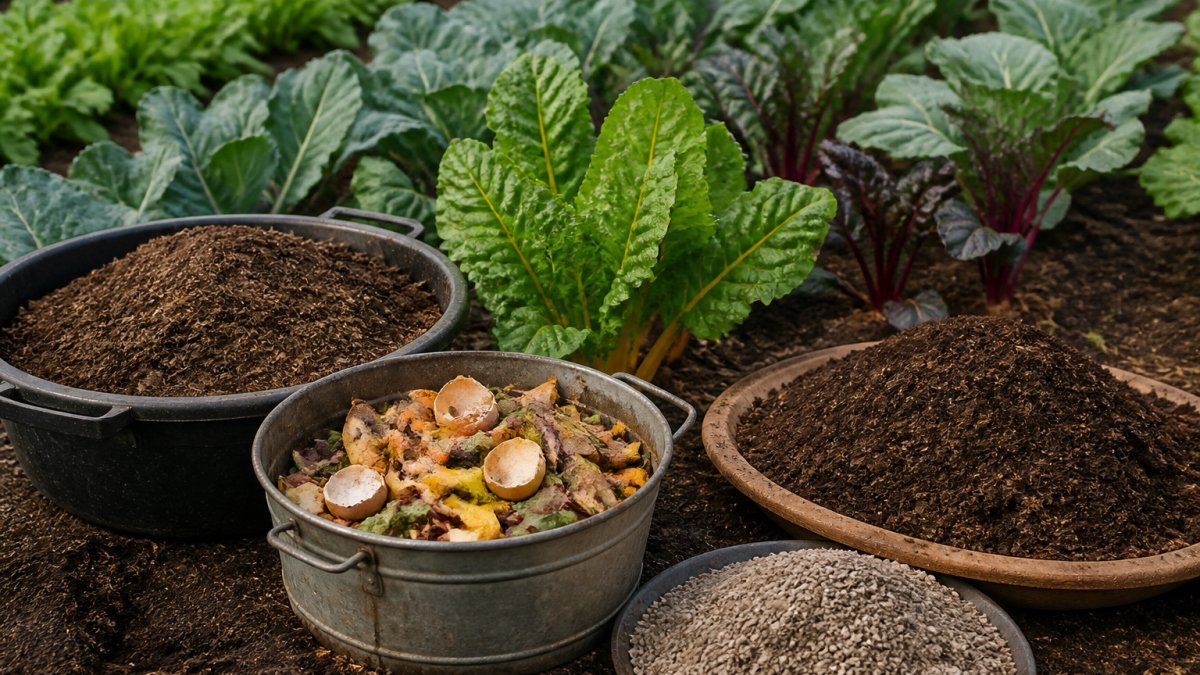
The best organic fertilizer for vegetables depends on what your soil test reveals and what stage your plants are in. Plant-based and animal-based sources each bring different nutrient profiles and release speeds to the garden.
Plant-Based Nutrients: Bone Meal, Blood Meal, and Cottonseed Meal
Plant-based fertilizers release nutrients more slowly than animal-based ones, making them valuable for steady, sustained feeding through the growing season.
Bone meal is primarily a phosphorus source, ideal when preparing soil for root crops or supporting flowering and fruiting plants.
Blood meal delivers nitrogen quickly, faster than most organic sources.
Cottonseed meal is a mild, balanced, slow-release fertilizer, useful for vegetables needing steady nitrogen without blood meal's spike.
Animal-Based Nutrients: Worm Castings, Guano, and Well-Rotted Manure
Animal-based sources often release nutrients faster than plant-based options and are generally richer in overall nutrient density.
Worm castings are finished compost from worms, so nutrients are immediately plant-available.
Guano (seabird or bat droppings) is exceptionally high in nitrogen and phosphorus. A small amount goes a long way.
Well-rotted manure improves soil structure while slowly releasing nitrogen. The key word is "well-rotted": fresh manure can burn plants and introduce pathogens, so ensure it's aged at least six months, or better yet, a year or more.
How to Fertilize a Vegetable Garden Using Soil Test Results
A soil test removes the guesswork. University of Maryland Extension advises using nitrogen-only fertilizers when a soil-test report indicates high phosphorus.
Collect soil samples from several garden spots, mix them, and send them to your local extension office.
Then match your fertilizer to the gaps. High phosphorus but low nitrogen? Use a nitrogen-only source like blood meal or fish emulsion.
When to Fertilize Vegetable Plants: Timing and Growing Season Strategy
Timing and rate matter as much as product choice. Most organic fertilizers release slowly, so apply them two to four weeks before planting to let soil biology break them down. The rule: feed the soil before the plant, then supplement when each crop's demand peaks.
Crop-Specific Feeding Schedules and Application Rates
Use these as starting points, then adjust based on your soil test and plant vigor. Rates are for established in-ground beds; reduce by about half for containers and raised beds with limited soil volume.
Heavy feeders (tomatoes, peppers, eggplant, squash, corn, brassicas):
- At planting: work 2-4 inches of compost plus a balanced organic fertilizer (follow label rate for your bed size) into the top 6 inches.
- Three to four weeks after transplant: side-dress with a nitrogen-rich source such as blood meal or fish emulsion at roughly 1-2 tablespoons per plant, scratched into the surface and watered in.
- At first flower: switch to a phosphorus- and potassium-leaning source (bone meal, kelp meal, or a low-nitrogen blend) to support fruit set rather than leaf growth.
Leafy greens and herbs (lettuce, spinach, kale, basil):
- At planting: incorporate compost and a mild balanced fertilizer.
- Every 2-3 weeks during active harvest: apply a dilute nitrogen source (fish emulsion at half label strength or worm castings as a top dressing) to keep new leaves coming.
- Stop feeding about two weeks before final harvest to avoid soft, overly leafy growth.
Root crops (carrots, beets, radishes, turnips):
- Before planting: add compost and a phosphorus source (bone meal) but skip high-nitrogen amendments, which encourage forked, hairy roots and lush tops at the expense of the root.
- Mid-season: a light potassium source (kelp meal or wood ash in small amounts) supports root sizing. Avoid fresh manure entirely.
Legumes (beans, peas):
- These fix their own nitrogen. Apply compost at planting and little else; excess nitrogen reduces pod set. A phosphorus and potassium source at flowering is usually sufficient.
Adjusting for Containers and Small Spaces
Containers leach nutrients faster and have less soil to buffer mistakes. Feed every 2 weeks with a dilute organic liquid fertilizer and use a balanced blend rather than a single-nutrient source. Raised beds are a middle ground: feed every 3-4 weeks and top-dress with compost each season as organic matter decomposes.
Reading Plant Signals
Pale lower leaves and slow growth signal nitrogen need. Poor flowering, weak stems, or fruit that fails to size up points to phosphorus or potassium shortage. Yellowing between veins can indicate pH imbalance rather than missing nutrients, another reason a soil test beats guesswork. Judge feeding success by new growth, not old leaves.
Homemade Fertilizer for Vegetable Garden: Rice Water, Eggshells, and Banana Peels
Kitchen-scrap fertilizers are popular because they're free and gentle, but they carry two risks most guides skip: unpredictable nutrient content and food-safety concerns near harvest. Treat them as supplements, not complete programs, and follow the safety intervals below.
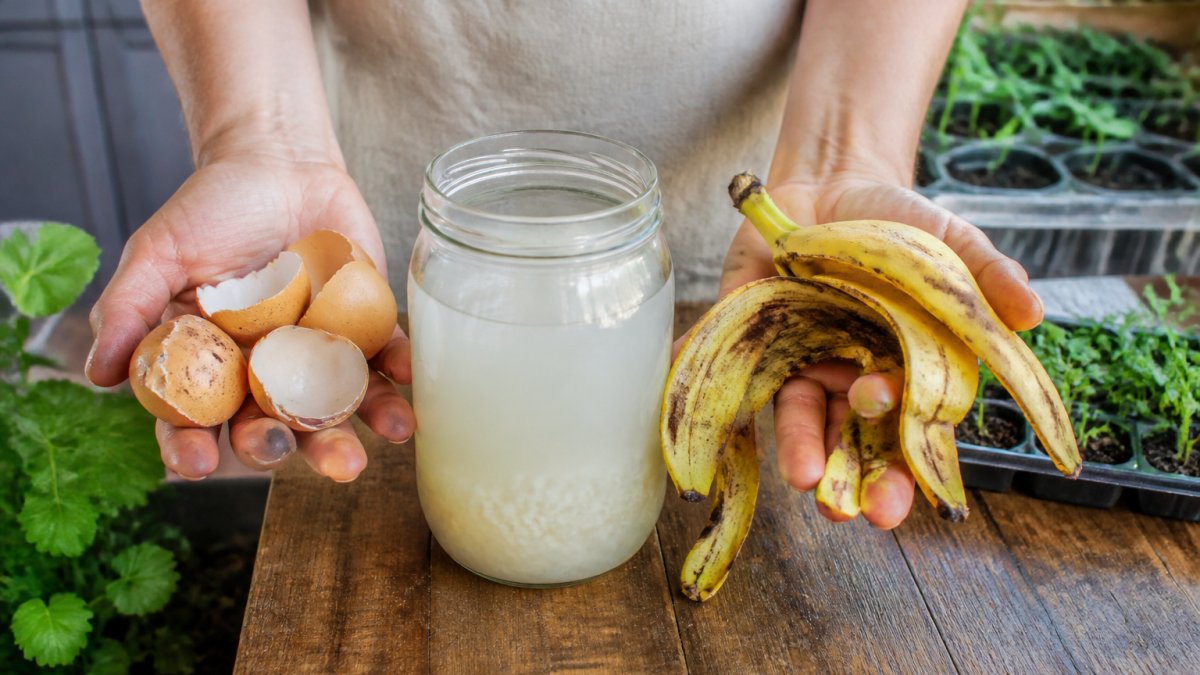
Rice water (the starchy water from rinsing or cooking rice) contains small amounts of nitrogen and trace minerals. Apply it diluted, about one part rice water to three parts plain water, every 1-2 weeks.
Eggshells are calcium carbonate, which breaks down very slowly, often over a full season. Crush them finely and work them into soil before planting rather than burying whole shells.
Banana peels contain potassium and small amounts of phosphorus.
Safe Handling and Storage of Homemade Inputs
Homemade fertilizers vary widely in nutrient content and can carry pathogens if they include fresh kitchen scraps or manure. Follow these practices:
- Store rice water and peel teas in the refrigerator and use within a week. Fermenting liquids left at room temperature can grow mold and harmful bacteria.
- Dry eggshells and peels thoroughly before storing in a sealed container; moisture invites mold.
- Never apply raw kitchen scraps directly to soil where root vegetables or leafy greens are growing for immediate harvest. Bury scraps only in fallow beds or compost piles, and allow them to fully decompose before planting.
Homemade fertilizers are not a substitute for a soil test or a balanced organic program. If your soil is deficient in a major nutrient, kitchen scraps won't correct it quickly enough to save a crop. Use them to supplement compost and targeted amendments, not replace them.
Five Mistakes That Undermine Vegetable Yields
Mistake 1: Applying Fertilizer Without a Soil Test
The most common error: applying fertilizer on assumption rather than data. You might add phosphorus when your soil already has excess, or skip nitrogen when it's critically low. Without a soil test, you're buying products your garden doesn't need while creating nutrient imbalances that reduce yields.
Mistake 2: Over-Applying Organic Fertilizer
Organic fertilizers are lower in nutrient analysis than synthetic options, which makes gardeners think they're safer to apply generously. Iowa State University Extension notes that organic fertilizers are often lower in nutrient analysis, making them less likely to cause injury from over-application yet they can still cause problems. Excess nitrogen promotes leafy growth at the expense of flowers and fruit.
Mistake 3: Ignoring Crop-Specific Nutrient Needs
Leafy greens need different nutrition than fruiting plants. Applying the same fertilizer to everything wastes resources and reduces yields, tailor your approach to what each crop needs at each growth stage.
Mistake 4: Using Untreated Manure Too Close to Harvest
Fresh or inadequately aged manure carries pathogens that contaminate vegetables, especially those eaten raw. Apply well-rotted manure only, and stop applications at least 90 days before harvesting leafy greens or root vegetables meant for raw consumption. For cooked vegetables the window can be shorter, but thorough aging is always safer.
Mistake 5: Applying Fertilizer at the Wrong Growth Stage
Feeding a flowering tomato nitrogen-heavy fertilizer diverts energy into leaves rather than fruit. Early-season feeding supports root development, mid-season feeding supports leaf growth, and late-season feeding supports flowering and fruiting, each timing has a purpose.
Here are the most common fertilizer mistakes and how to fix them.
| Mistake | Cause | Fix |
|---|---|---|
| Applying fertilizer without a soil test | Guessing at nutrient needs instead of testing | Get a soil test to identify actual deficiencies |
| Over-applying organic fertilizer | Assuming organic means safe to apply generously | Follow label rates; excess nitrogen reduces fruit set |
| Ignoring crop-specific nutrient needs | Using same fertilizer for all plants | Tailor feeding to each crop's growth stage |
| Using untreated manure too close to harvest | Fresh manure carries pathogens | Use well-rotted manure only; stop 90 days before harvest |
| Applying fertilizer at wrong growth stage | Feeding nitrogen when plants need phosphorus | Match nutrient timing to root, leaf, flower, or fruit stage |
Building Soil Health Through Organic Matter and Compost
The long-term strategy for organic vegetable gardening is building soil health, not chasing quick fertilizer fixes.
Add compost every season, working it into the top few inches or using it as mulch. Learn how to select and save seed from your best plants each year to develop varieties perfectly adapted to your garden's soil and conditions.
AgroThrive lists a 32-ounce bundle and a two-pack of one-gallon bundles for vegetable use, representing the range of organic fertilizer products available to home gardeners but the real foundation is the soil itself.
A soil test every 2-3 years keeps you informed about your soil's trajectory. You'll see organic matter increasing, nutrient levels stabilizing, and your fertilizer needs decreasing as your soil matures.
Start Your Organic Vegetable Garden with Tested Guidance
Growing vegetables organically isn't complicated once you understand what your soil needs and what your plants are asking for.
Herban Root and Remedy provides seasonal guides and planting calendars that walk you through the entire growing cycle, from soil preparation through harvest.
Start with a soil test. Match your fertilizer to the results. Build your soil with organic matter each season.
Frequently Asked Questions
What is the best organic fertilizer for a vegetable garden?
The best organic fertilizer depends on your soil's nutrient levels and your crop's needs. A soil test reveals whether you need nitrogen-only fertilizers or a balanced blend. For nitrogen-heavy feeders like leafy greens, blood meal or fish emulsion work well. For root crops and flowering vegetables, bone meal supports phosphorus. Worm castings provide slow-release, balanced nutrition across most vegetables. University of Maryland Extension recommends using soil-test information to avoid unnecessary phosphorus application, which can accumulate over time.
How do I apply homemade fertilizer for a vegetable garden safely?
Homemade inputs like compost, rice water, and eggshell powder should be fully decomposed or processed before application. Well-rotted compost can be worked into soil or side-dressed around plants. Rice water can be applied directly to soil weekly. Crushed eggshells take months to break down, so incorporate them into soil in autumn for spring crops. Never use fresh manure within 90 days of harvest; well-rotted manure is safer.
When should I fertilize vegetable plants during the growing season?
Timing depends on the crop and your soil. Cool-season vegetables like lettuce and broccoli need nitrogen early in growth; warm-season crops like tomatoes and peppers benefit from phosphorus and potassium as they flower and fruit. Side-dress nitrogen-hungry plants every 3-4 weeks during peak growth. For slow-release organic fertilizers, apply at planting and mid-season. Avoid fertilizing stressed plants or those showing nutrient deficiency without first checking soil pH and moisture, as other factors may be limiting growth.
Can organic fertilizers cause problems if I use too much?
Yes. Iowa State University Extension notes that organic fertilizers are often lower in nutrient analysis, making over-application less likely to burn plants immediately, but excess nutrients still accumulate in soil and can leach into groundwater. Over-application of compost or manure can create excessive nitrogen, encouraging leaf growth at the expense of fruit. Phosphorus buildup from repeated applications can interfere with micronutrient uptake. Always follow application rates based on soil-test recommendations rather than guessing.
The difference between a garden that produces and one that merely exists comes down to understanding what your soil can provide and what your plants actually need. Work with both, and you'll harvest abundantly.
