blog
How Do You Grow Potatoes in Raised Beds?
Last Updated: October 26, 2026
Quick Summary
To grow potatoes in raised beds, plant certified seed potatoes about 10 to 15 cm deep and 30 cm apart in loose, well-drained soil with a pH of 5.5 to 6.5. Hill soil or compost around the stems two or three times as they grow, and water deeply about 2.5 cm a week.
- A bed around 30 cm deep works for planting, with height added later through hilling.
- A 4x4 raised bed fits roughly 9 to 12 seed potatoes on a 30 cm grid.
- Potatoes want full sun, at least six hours a day, for good tuber set.
- Water at the base in the morning rather than overhead in the evening to limit blight.
- Stop watering for a week before lifting, then cure tubers in a dry, dark, airy spot.
Table of Contents
- Why Raised Beds Work for Potatoes (and When They Don't)
- Starting With Seed Potatoes: Varieties, Chitting, and Cutting
- The Best Soil for Potatoes in Raised Beds
- Potato Plant Spacing in Raised Beds: Depth, Orientation, and Layout
- How Many Potatoes in a 4x4 Raised Bed? Yield Math and Layout
- Watering, Hilling, and Sunlight: Keeping Plants Growing
- Growing Potatoes in Containers vs Raised Beds
- Troubleshooting Pests, Diseases, and Harvest Timing
- Frequently Asked Questions
Why Raised Beds Work for Potatoes (and When They Don't)
Learning how to grow potatoes in raised beds starts with one honest admission: raised beds are not automatically the best way to grow potatoes. They solve real problems, and they create real ones. At Herban Root and Remedy, we teach raised-bed growing because it suits small plots and tired soil, not because it wins every comparison.
Here is what a raised bed gives you:
- Loose, stone-free soil that lets tubers swell without hitting hardpan
- Fast spring warm-up, so you can plant earlier than in cold ground
- Drainage in wet climates, which matters because potatoes rot in waterlogged soil
- No digging to harvest, just lift and sift
The Case Against Raised Beds, Honestly
Potatoes are heavy feeders, and a raised bed is a closed pantry. Every tuber you pull takes nutrients with it. Gardenary's own gardener has written about why she stopped growing potatoes in raised beds, and a Reddit comparison of buckets, grow bags, raised beds and in-ground rows found raised beds did "decently" rather than best. Translation: raised beds work, but they are not magic. If your bed is shallow or your mix is poor, in-ground hilling will beat it. We would rather you know that now than blame yourself in July.
Starting With Seed Potatoes: Varieties, Chitting, and Cutting
Seed potatoes are small tubers or cut pieces grown specifically for planting, not eating. Buy certified seed stock rather than supermarket potatoes, which are often treated to stop sprouting.
Pick varieties by bed depth and climate:
- Shallow beds: choose compact, early varieties that set tubers close to the seed piece
- Cool, short seasons: earlies mature faster before blight pressure builds
- Hot climates: late varieties that tolerate warmth and store well
Chitting means letting seed potatoes sprout in a light, cool spot before planting. Stand them upright in an egg carton for a few weeks. Short, stubby green sprouts are what you want. Long pale ones snap off.
If you cut large tubers, leave at least two sprouts per piece and let the cut faces dry for a day before planting, cut side down. If you plan to keep your own stock for next season, our guide to saving, preserving and storing seeds covers the storage side properly.
The Best Soil for Potatoes in Raised Beds
The best soil for potatoes in raised beds is loose, well-drained and rich in organic matter, with a pH around 5.5 to 6.5. That slightly acid range discourages scab and suits potatoes better than neutral ground.
Fill beds with a mix of topsoil, compost and aged manure. Skip fresh manure, which burns sprouts and invites disease. Aim for a texture you can push a hand into without a trowel.
Two things matter more than any brand of mix:
- Drainage: potatoes rot fast in standing water, so loosen the base of the bed if it sits on clay
- Depth: a bed around 30 cm deep works for planting, and you build height with hilling later
Top up with compost each season. A raised bed that grew potatoes last year is already hungry.
Potato Plant Spacing in Raised Beds: Depth, Orientation, and Layout
Potato plant spacing in raised beds is roughly 30 cm between seed pieces and 60 to 75 cm between rows, planted about 10 to 15 cm deep. Tight spacing gives you more plants and smaller potatoes, so leave room if you want baking-size tubers.
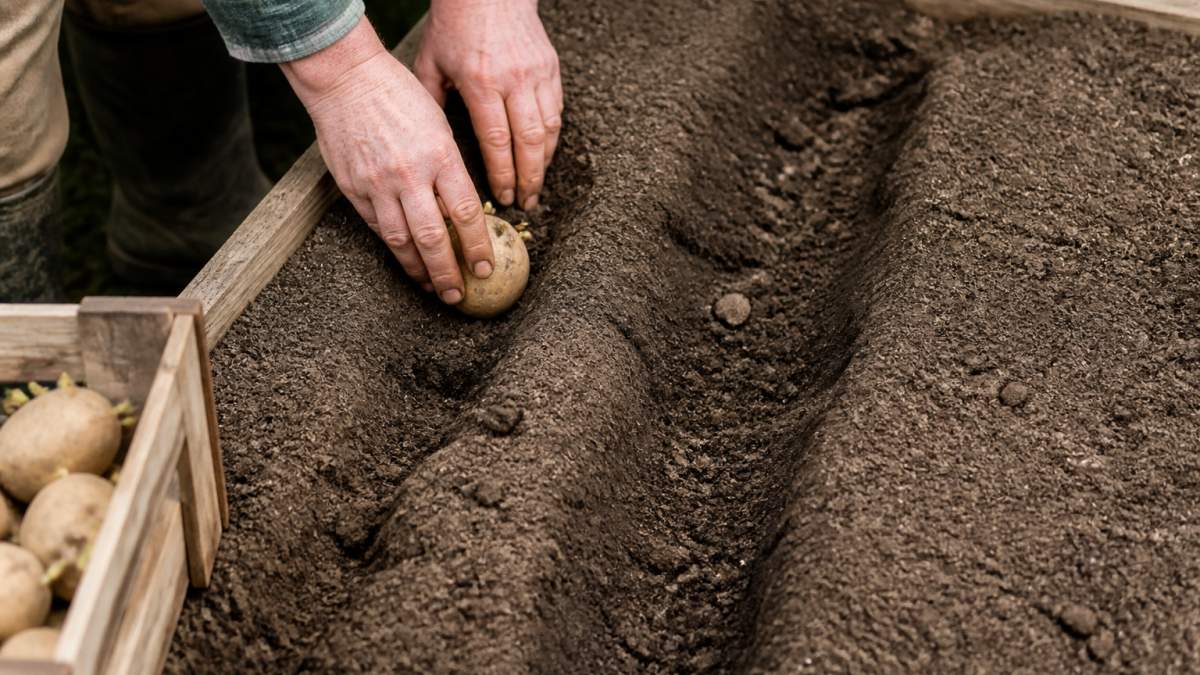
Plant with the sprouts, or "eyes," facing up. Sprout orientation matters: upside-down pieces waste energy pushing shoots the long way round. Set each piece in a shallow trench, cover with soil, and water gently.
A simple layout for a 1.2 m wide bed:
- Two rows, 60 to 75 cm apart
- 30 cm between plants in each row
- Trenches running the length of the bed for easy hilling
How Many Potatoes in a 4x4 Raised Bed? Yield Math and Layout
You can fit roughly 9 to 12 seed potatoes in a 4x4 raised bed, planted on a 30 cm grid. That is the honest answer to how many potatoes in a 4x4 raised bed.
Now the yield math, kept realistic. Most practitioners find that a single seed potato yields somewhere between 1 and 3 kg of tubers in good conditions, with earlies tending toward the lower end and maincrops toward the higher end when water and fertility hold steady. Small beds reward realistic expectations, not pantry-filling fantasies. (Source: benefits of raised bed gardening)
| Bed Size | Seed Potatoes | Spacing | Realistic Harvest Range |
|---|---|---|---|
| 4x4 bed | 9-12 | 30 cm grid | 9-30 kg depending on variety and season |
| 4x8 bed | 18-24 | 30 cm grid | 18-60 kg depending on variety and season |
| 1.2 m wide row, 3 m long | 10-14 | 30 cm in-row | 10-35 kg depending on variety and season |
Variety shifts the math more than most guides admit. Early varieties such as 'Charlotte' or 'Swift' set tubers close to the seed piece and finish fast, which suits shallow beds and short seasons but caps yield. Maincrops like 'King Edward' or 'Desiree' need more room and a longer season but can double the harvest per plant.
A simple layout for a 1.2 m wide bed:
- Two rows, 60 to 75 cm apart
- 30 cm between plants in each row
- Trenches running the length of the bed for easy hilling
Want more? Build a second bed rather than cramming one. Crowded potatoes compete for water and nutrients, and the tubers come out small. If you are planning a full plot, our monthly garden tasks for beginners helps you slot potato planting and hilling into the wider season.
Watering, Hilling, and Sunlight: Keeping Plants Growing
Water potatoes deeply and less often. Aim for about 2.5 cm of water a week, including rain, and more in hot spells. Dry soil at tuber-set time means low yield; soggy soil means rot.
Hilling is the practice of adding soil around the stems as plants grow (Growing potatoes: secrets of success / RHS). It keeps developing tubers covered, away from sunlight, which turns them green and bitter. In a raised bed, simply add compost or soil mix to raise the level as stems stretch. Repeat two or three times through the season.
Sunlight needs are straightforward: potatoes want full sun, at least six hours a day. Shade gives you leafy plants and few tubers.
Watch out: watering overhead in the evening leaves foliage wet overnight, which is exactly when blight takes hold. Water at the base, in the morning.
Growing Potatoes in Containers vs Raised Beds
Growing potatoes in containers vs raised beds comes down to space, yield, effort, and how much control you want. Most comparison articles mix methods without lining them up side by side, so here is the direct comparison the SERP usually skips.
| Factor | Raised Bed | Container or Grow Bag | In-Ground Row |
|---|---|---|---|
| Space needed | 1.2 m wide bed, any length | 20-40 L bag or bucket per plant | Open ground, rows 60-75 cm apart |
| Typical yield per plant | 1-3 kg | 0.5-1.5 kg | 1-3 kg |
| Watering effort | Moderate; holds moisture | High; dries fast | Moderate; depends on soil |
| Hilling method | Add compost to raise bed level | Top up the container | Pull soil from between rows |
| Crop rotation | Easy; rotate beds | Difficult; fresh mix each season | Possible but slower |
| Best for | Small plots, poor soil, wet climates | Balconies, patios, paved yards | Large plots, good soil |
Containers suit anyone with a balcony or paved yard. Use grow bags or buckets with drainage holes, fill with the same loose mix, and hill by topping up the container. The trade-off is faster drying and smaller harvests, so plan to water more often and expect less per plant.
Raised beds hold moisture longer and give roots more room, so plants are more forgiving of a missed watering. They also let you rotate crops properly, which containers cannot do without replacing the mix.
A common pattern is to start with containers to learn the rhythm of hilling and watering, then move to a raised bed once you know how much space you can commit. For anyone building a full year of growing around a small plot, our monthly garden tasks for beginners pairs well with a raised-bed plan.
Troubleshooting Pests, Diseases, and Harvest Timing
Most raised-bed potato problems trace back to water, airflow or timing. Fix those and the rest gets easier.
- Blight: brown patches spreading fast in wet weather. Improve airflow, water at the base, and remove affected foliage
- Scab: rough patches on skins, worse in alkaline soil. Keep pH in the acid range and rotate beds
- Slugs and wireworms: lift early crops promptly and clear debris between seasons
- Greening: tubers pushed above soil turn green. Hill more soil over them
- Cracking: uneven watering swells tubers too fast. Water steadily
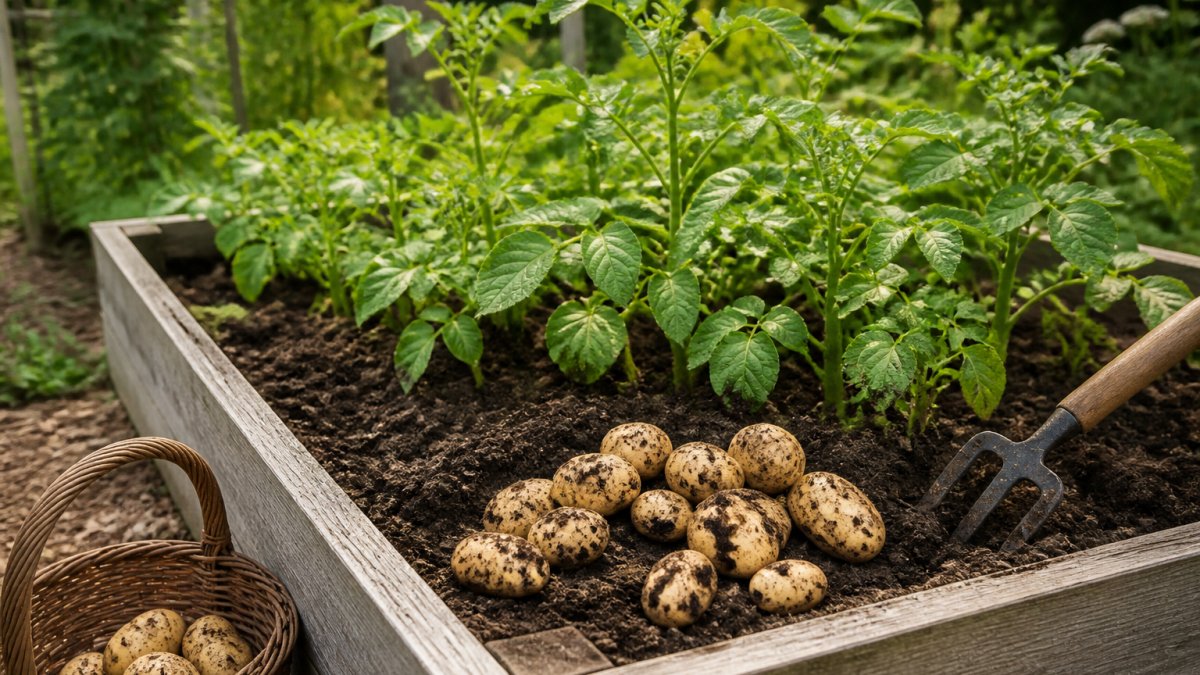
Harvest timing depends on variety. Earlies are ready when flowers open, and you can steal a few "new" potatoes by feel. Maincrops are ready when foliage yellows and dies back. Stop watering for a week before lifting, then cure tubers in a dry, dark, airy spot before storing.
Frequently Asked Questions
How deep should a raised bed be for potatoes?
A raised bed for potatoes needs enough loose soil for roots and tubers to form, plus room to hill. Many gardeners build beds around 30 cm deep and fill them with loose, well-drained soil rich in organic matter. Shallow beds can still work if you hill generously as plants grow, but you will have less buffer against drying out. Deeper beds hold moisture more evenly and give tubers more room, which matters most in hot, dry climates.
How many potatoes can you grow in a 4x4 raised bed?
A 4x4 raised bed (about 1.2 m square) typically holds 9 to 12 seed potatoes when spaced roughly 30 cm apart in both directions. That spacing leaves room for hilling and airflow. Yield depends on variety, soil fertility, and watering, but a reasonable expectation is several kilograms per bed from a healthy crop. Crowding more plants in raises competition for water and nutrients and usually lowers the size of individual tubers.
Are raised beds or containers better for growing potatoes?
Raised beds suit gardeners who want a permanent, easier-to-water plot with more soil volume and steadier moisture. Containers and grow bags suit small spaces, patios, and renters, and they make harvesting simple because you can tip the bag out. Containers dry out faster and heat up more, so they need closer attention. If you have room for a bed, it usually demands less daily watering; if space is tight, a container still grows a worthwhile crop.
When are potatoes ready to harvest?
New potatoes are ready roughly two to three weeks after the plants finish flowering, while storage potatoes are lifted once the foliage yellows and dies back naturally. Stop watering as the tops die down so tubers firm up and skins set. Lift on a dry day with a fork well outside the plant to avoid spearing tubers, then cure them in a dry, dark, airy spot before storing. Leave any green tubers out of the kitchen entirely.
Growing potatoes well is less about fancy gear and more about loose soil, steady water and honest expectations. That is the whole method we teach at Herban Root and Remedy, where our seasonal guides and planting calendars walk you through each step, our tested recipes help you use the harvest, and our ad-free, private platform keeps the knowledge in one place, passed down rather than buried in ads. Join the community and grow a bed you actually understand.
