how-to
How to Freeze Strawberries for Winter Without Losing Texture
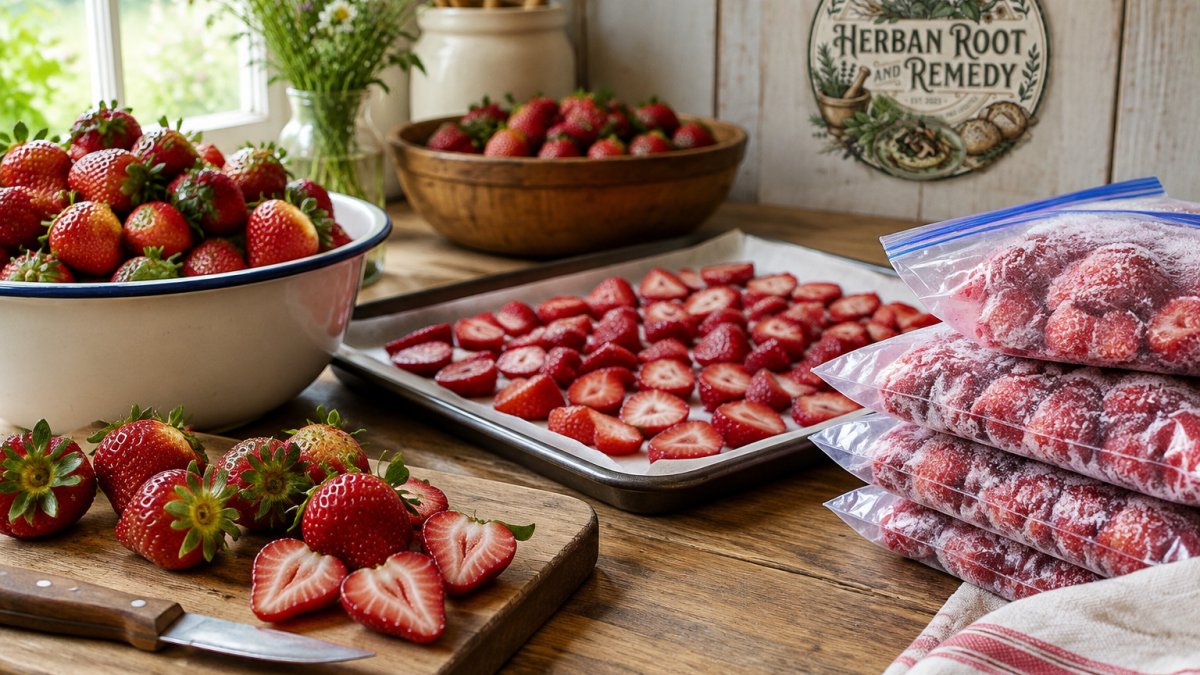
Last Updated: November 21, 2026
Quick Summary
To freeze strawberries for winter, rinse and hull firm ripe berries, dry them completely, then spread them in a single layer on a parchment-lined tray and freeze until solid, usually one to two hours. Move the frozen berries into freezer bags, press out the air, seal and label with the date.
- Never soak berries in water, because strawberries absorb moisture through their skins and turn mushy.
- Flash-frozen dry-packed berries keep their best quality for 3 to 6 months at 0°F or below.
- Syrup-packed berries hold their shape longest, staying good for 8 to 12 months.
- Thaw frozen strawberries in the refrigerator, never on the counter, and never refreeze thawed fruit.
- For smoothies, blend berries straight from the freezer without thawing.
Table of Contents
- How to Prepare Strawberries for Freezing
- Flash Freezing Strawberries on a Tray
- How to Freeze Strawberries Without Parchment Paper
- How to Freeze Strawberries With Sugar
- How to Freeze Strawberries in Syrup
- How to Freeze Strawberries for Smoothies
- Packaging, Freezer Burn and Storage Times
- Start Your First Freezer Batch This Weekend
- Frequently Asked Questions
How to Prepare Strawberries for Freezing
Learning how to freeze strawberries for winter starts with one simple truth: the freezer cannot rescue a bad berry. It only locks in what you already have. (Source: USDA food safety standards)
So the goal is simple. Pick ripe fruit, handle it gently, and get it cold fast.
Here is the whole process in one glance:
| Stage | What You Do | Time Needed |
|---|---|---|
| Wash and sort | Rinse in cold water, remove soft berries | 10 minutes |
| Hull and dry | Cap the stems, pat dry completely | 15 minutes |
| Freeze | Flash freeze on a tray, then bag | 2 hours plus storage |
| Label and store | Seal airtight, date the bag | 5 minutes |
Fresh berries spoil quickly, so work in small batches and keep the unwashed fruit chilled until you are ready.
Washing, Hulling and Drying Berries
Rinse fresh berries in cold water and drain them in a colander. Do not soak them.
Next, remove the stems and leaves. You can cap them with a small knife or simply twist out the green top.
Then dry the berries. Spread them on paper towels or a clean kitchen cloth and pat gently until no moisture remains. This step matters.
Sort as you go. Set aside any bruised or soft berries for jam or sauce, and freeze only firm, ripe fruit.
Flash Freezing Strawberries on a Tray
Flash freezing is the method we recommend for most households. It keeps berries separate, so you can scoop out exactly what you need later.
Here is how it works.
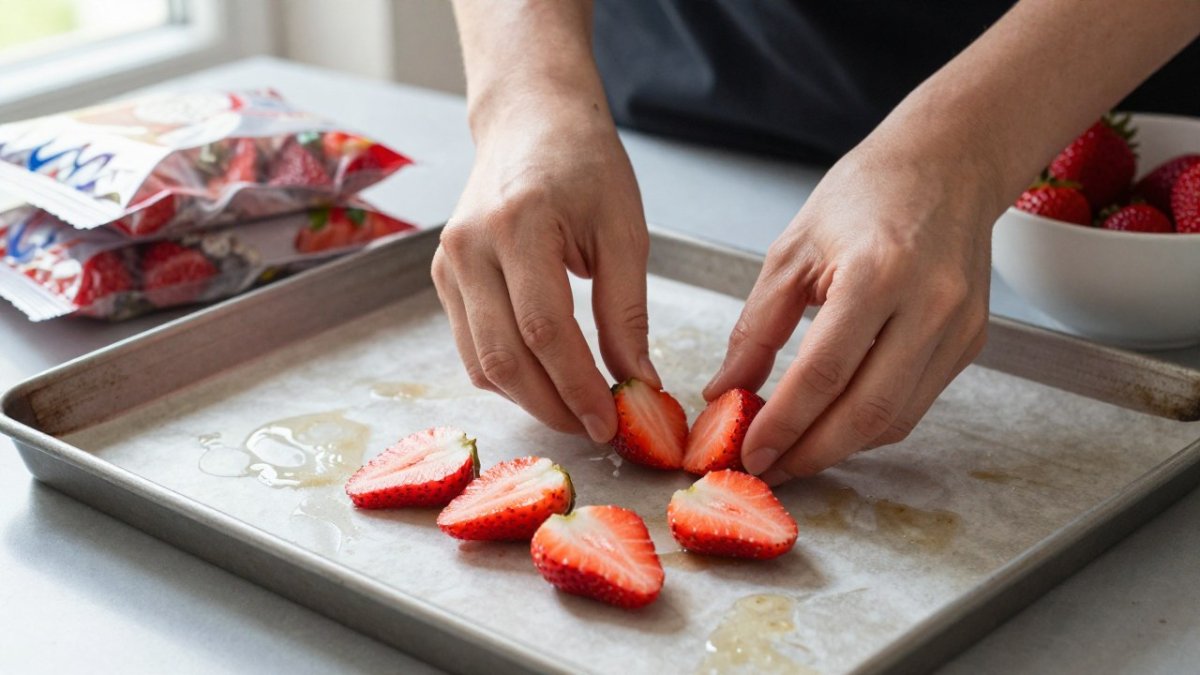
- Line a baking sheet or jelly-roll pan with parchment.
- Spread whole or sliced berries in a single layer, not touching.
- Slide the tray into the freezer and leave it until the fruit is solid, usually one to two hours.
- Lift the frozen berries into freezer bags or containers.
- Press out the air, seal, and label with the date.
Work quickly once the tray comes out. Berries soften fast at room temperature, and refreezing thawed fruit ruins the texture for good.
How to Freeze Strawberries Without Parchment Paper
You can freeze strawberries without parchment paper using a few everyday kitchen items. The parchment only stops berries from sticking to the tray, so any clean barrier works.
Try one of these:
- A silicone baking mat
- A clean, dry tea towel laid flat
- A light dusting of fine sugar on the tray
- A rigid plastic cutting board that fits your freezer
Freeze the tray uncovered until the berries are solid, then move them into bags. If you skip the barrier entirely, frozen berries may cling to the pan.
Watch out: do not pour warm berries straight into a deep container and freeze them in one lump.
How to Freeze Strawberries With Sugar
Freezing strawberries with sugar is a traditional method that works well for pies, sauces, and dessert toppings. The sugar draws out juice and protects the fruit from ice damage.
The method is simple. Slice the berries into a bowl, sprinkle sugar over them, and toss gently.
A few practical notes:
- Use enough sugar to coat the fruit lightly, not to drown it.
- Stir once more before sealing so the syrup covers every piece.
- Label the container clearly, since sweetened berries behave differently in recipes.
- Thaw in the fridge and use the syrup too. It is the best part.
Sweetened berries keep their shape better than dry-packed ones, though they soften more than flash-frozen fruit.
How to Freeze Strawberries in Syrup
Freezing strawberries in syrup suits whole berries you plan to serve over yogurt, spoon into a bowl, or use in desserts where you want the fruit to hold its shape. The syrup cushions the fruit and can help limit the ice crystals that soften berries.
The Syrup Ratio and Why It Matters
A light syrup is the usual choice for strawberries because it protects texture without overwhelming the fruit's own sweetness. A common starting point is one part sugar to four parts water by volume, for example, 1/4 cup sugar dissolved in 1 cup water.
Watch out: never pour warm syrup over fresh berries. Warm syrup softens the fruit before it ever freezes, and you lose the texture advantage the method is supposed to provide.
Packing and Headspace
Pack whole, hulled berries into rigid freezer containers or wide-mouth glass jars. Cover them completely with cooled syrup, leaving about 1/2 inch of headspace for expansion. Press a piece of plastic wrap onto the surface of the syrup before lidding to block air contact, any exposed fruit will discolor and dry out. Seal, label with the date and method, and freeze flat if space allows.
How Syrup-Packing Compares to Other Methods
Syrup-packed berries hold shape best and are ideal for serving whole. Sugar-packed berries are similar but produce a thicker syrup and are better for pies, sauces, and toppings. Dry-packed flash-frozen berries are the most versatile for smoothies and baking but soften most. If you are freezing a large harvest, a practical approach is to flash-freeze most of it dry and syrup-pack a smaller batch for serving.
Troubleshooting Syrup-Packed Berries
If the fruit floats above the syrup, it was not fully submerged, top off with a little extra cooled syrup before freezing. If the berries taste watery after thawing, the syrup was too light for the intended use; a slightly heavier syrup next time will help. Thaw syrup-packed berries in the refrigerator and use the syrup too, it is the best part.
How to Freeze Strawberries for Smoothies
Flash freezing is useful for smoothies. Individual frozen berries drop straight into the blender without a fight.
Wash, hull, and dry the berries, then decide on your cut. Halves and thick slices blend faster than whole fruit, and smaller pieces mean less strain on your machine. Spread them on a tray, freeze until solid, then bag them in portions sized to your usual batch.
A few tricks from our own kitchen:
- Freeze smoothie portions in small bags so you grab one and go.
- Blend frozen berries with a splash of liquid first, then add the rest.
- Pair them with a from-scratch plant milk. Our homemade oat milk takes four ingredients and five minutes, with no gums or additives.
- Add a spoon of thick, tangy yogurt for body. This coconut milk yogurt sets overnight and behaves like dairy yogurt in a blender.
For more ways to use your frozen fruit through the year, browse our kitchen guides.
Packaging, Freezer Burn and Storage Times
Packaging decides whether your berries taste fresh in January or taste like the inside of a freezer. Air is the enemy. It pulls moisture from the fruit and leaves those dry, pale patches called freezer burn. The fix is not one perfect container, it is matching the container to how you plan to use the berries and removing as much air as you reasonably can.
Choosing Between Bags and Rigid Containers
Freezer bags and rigid containers each have a job. Bags suit dry-packed and flash-frozen berries you plan to pour or scoop, and rigid containers suit sugar-packed or syrup-packed fruit that needs to stay submerged.
- Heavy-duty freezer bags: best for whole or sliced dry-packed berries. You can press them nearly flat, which stacks efficiently and forces air out. Choose bags labeled for freezer use; thin storage bags tear and let air in.
- Rigid freezer containers: best for sugar-packed and syrup-packed berries. They hold their shape, protect soft fruit from crushing, and let you keep liquid coverage over the fruit. Leave headspace for expansion.
- Glass jars: work for dry-packed berries if you leave headspace and use wide-mouth jars. They are heavy and can crack with rapid temperature change, so temper them in the fridge before freezing if the jar was warm.
Removing Air Without a Vacuum Sealer
You do not need special equipment to get most of the air out. For bags, press the berries into a single layer, then roll the bag from the bottom, pressing gently as you go, and seal just before the last of the air escapes.
Watch out: do not over-compress soft or sugar-packed berries while removing air. You will crush the fruit and release juice that freezes into a solid block.
How Long Frozen Strawberries Actually Keep
Storage time depends on the method, not just the calendar. Use these windows as general guidance for quality:
| Method | Best Quality Window | What Changes Over Time |
|---|---|---|
| Dry-packed, flash-frozen | 3 to 6 months | Texture softens first; color dulls; ice crystals grow if air was not removed |
| Sugar-packed | 6 to 9 months | Syrup thickens; fruit softens; flavor stays strong |
| Syrup-packed | 8 to 12 months | Fruit holds shape longest; syrup may thin slightly as it thaws |
Best Quality Window
Frozen fruit kept at a steady 0°F (-18°C) or below stays safe for longer; quality is what changes over time. What fades is quality: berries that were firm turn soft and watery, and the fresh flavor flattens. Rotate your stock and use the oldest bags first. Label every container with the date and the method, because a bag of sugared berries behaves differently in a recipe than a bag of dry-packed ones.
Thawing and Food Safety
Thaw frozen strawberries in the refrigerator, not on the counter. A common pattern is to move a bag to the fridge the night before you need it. For smoothies, you do not need to thaw at all, frozen berries blend directly. For baking and sauces, you can add them frozen or thaw partially; expect extra liquid, since freezing breaks cell walls and releases juice.
Start Your First Freezer Batch This Weekend
The best time to freeze strawberries for winter is the day you bring them home, not the day they start to soften.
Start small. Freeze one tray this weekend and see how the berries hold up. Then scale the method that suits your kitchen.
Freezing a harvest is one skill in a much larger picture, and it is easier when you have a guide beside you.
Frequently Asked Questions
Do strawberries get mushy if you freeze them?
They soften, but they do not have to turn to mush. Strawberries are mostly water, so ice crystals break down cell walls during freezing. Flash freezing on a single layer keeps berries separate and firm enough to handle. For the best texture, freeze them dry and unsweetened, then use them in smoothies, baking or cooked sauces. Sugar-packed and syrup-packed berries hold a softer, saucier texture that suits spoon desserts and toppings.
Is it better to freeze strawberries whole or sliced?
It depends on how you plan to use them. Whole berries keep their shape best and work for snacking, garnishes and thawed fruit bowls. Halved or sliced berries freeze faster, pack tighter and blend more easily, which makes them the better choice for smoothies and baking. Cut them to the size you will actually use later so you avoid thawing a large batch just to chop it.
Can you freeze strawberries with the tops on?
You can, but hull them first for better results. The green caps and leaves add bulk, take up freezer space and do not improve flavor. Removing the stems and leaves before freezing also means the berries are ready to use straight from the bag. If you are short on time during a large harvest, freeze whole berries with caps on and twist the tops off while still frozen, though hulling first is the cleaner method.
How long do frozen strawberries keep their quality?
Plan to use dry-packed berries within about six months and sugar- or syrup-packed berries within eight to twelve months for the best flavor and texture. Quality fades gradually rather than all at once. Berries frozen longer are still safe to cook with but may taste flatter and release more liquid. Label each bag with the date and the method so you can rotate older batches to the front of the freezer.
