comparison
Seasonal Gardening Calendar Review for Beginners
Table of Contents
- What Makes a Seasonal Gardening Calendar Work for Beginners
- Vegetable Planting Calendar by Month: How to Read and Use One
- Regional Planting Calendar: Why Location Matters More Than You Think
- Garden Planner App with Planting Calendar: Digital Tools vs. Paper
- Seed Starting Calendar for Vegetables: Indoors vs. Direct Sowing
- How to Adapt Your Calendar to Microclimates and Unexpected Weather
- From Calendar to Harvest: Your First-Year Workflow
- Frequently Asked Questions
Last Updated: October 12, 2026
What Makes a Seasonal Gardening Calendar Work for Beginners
A seasonal gardening calendar is a planting guide customized to your location that tells you exactly when to start seeds indoors, transplant seedlings outdoors, and direct sow vegetables into garden beds. Unlike generic month-by-month advice, a real calendar accounts for your local frost dates and growing season, the specific window when your region's temperatures allow plants to thrive.
Here's what most beginners get wrong: they follow a calendar designed for a different climate zone and wonder why nothing grows. The single biggest breakthrough happens when aspiring homesteaders stop guessing and start using location-based planting dates.
The difference between success and disappointment often comes down to one tool: understanding your regional planting calendar and knowing how to read it. A beginner armed with the right calendar can grow a thriving vegetable garden in their first year. Without it, timing becomes guesswork.
Below, we'll walk you through how to choose and use a seasonal gardening calendar that actually fits your space, climate, and skill level, whether you're planting in a backyard bed, a container on a balcony, or a small raised garden.
Vegetable Planting Calendar by Month: How to Read and Use One
A vegetable planting calendar by month breaks the growing year into actionable steps: which vegetables to start indoors in early spring, which to direct sow once soil warms, and which to plant again in mid-summer for a fall harvest. The calendar shows you the timing for each crop based on your location's frost dates and typical growing season length.
Most calendars organize information by crop, not by month. You'll find a row for tomatoes, another for lettuce, another for beans. Each row shows you a window, sometimes just 2-3 weeks, sometimes spanning months, when planting that crop makes sense. The calendar accounts for how long each vegetable takes to mature from seed to harvest.
Here's the practical part: a beginner should start with 5-7 vegetables their first year, not twenty. Pick crops that are forgiving, lettuce, beans, zucchini, tomatoes, and herbs like basil. Look at your calendar and identify which ones have the longest window for planting. Those give you more flexibility if you miss the first opportunity.
Many gardeners find that reading a planting schedule takes practice. The calendar might show "Start indoors 6-8 weeks before last frost" for tomatoes. That means counting backward from your region's last frost date. If your last frost is May 15, you'd start seeds indoors around mid-March.
Regional Planting Calendar: Why Location Matters More Than You Think
Your regional planting calendar is fundamentally different from your neighbor's three states away. A planting guide written for zone 5 doesn't work in zone 8. A calendar designed for a coastal climate with mild winters won't help someone in a continental region with hard freezes.
The reason is simple: frost dates vary dramatically by geography. Two regions might both be called "spring," but one has its last frost on April 15 and the other on June 1. Plant tender crops too early in the second region and they'll freeze.
A regional planting calendar accounts for this by using your specific location, usually your zip code or growing zone, to calculate planting windows. The calendar pulls your actual frost dates, day length, and typical temperature patterns. That specificity is what separates a useful tool from an expensive paperweight.
Beginners often underestimate how much location matters. You might find a beautiful printed calendar at a garden center, but if it's generic to your state or region rather than customized to your exact location, you're back to guessing.
Old Farmer's Almanac provides ZIP-code-customized planting calendars that account for your local frost dates. This level of specificity is what turns a calendar into a reliable planning tool rather than a rough estimate.
Garden Planner App with Planting Calendar: Digital Tools vs. Paper
A garden planner app with planting calendar combines two functions: a visual layout tool where you map where plants go in your beds, and an integrated calendar that reminds you when to plant each crop.
Digital tools offer real advantages for beginners. They send reminders so you don't miss planting windows. They store your plan so you can reference it next year and improve. Many apps let you adjust for your microclimate or experiment with different layouts without wasting paper.
Paper calendars have their place too. They don't require a phone or internet. They're tactile, many gardeners find writing notes by hand makes the information stick. A printed calendar on your fridge becomes a conversation starter and a visual reminder of the season ahead.
The trade-off is usually between convenience and distraction. An app on your phone is always with you, but it's also a portal to notifications, emails, and the rest of your digital life.
For beginners, we recommend starting with whichever format matches your habits. If you're already checking your phone constantly, a garden planner app will integrate smoothly. If you prefer to unplug during garden time, a printed calendar or a simple spreadsheet might serve you better.
Seed Starting Calendar for Vegetables: Indoors vs. Direct Sowing
A seed starting calendar for vegetables tells you which crops to start indoors under grow lights weeks before the last frost, and which ones to plant directly into the soil once it warms. This distinction is crucial because different vegetables have different needs.
Crops like tomatoes, peppers, and eggplants need a long growing season. Starting them indoors 6-8 weeks before your last frost gives them time to develop as sturdy seedlings before transplanting outdoors.
Other vegetables, beans, peas, squash, cucumbers, prefer direct sowing. Their seeds germinate quickly in warm soil and they don't like being transplanted. Planting them directly into the garden after the last frost date is faster and more reliable than starting them indoors.
A beginner's seed starting calendar should clearly mark which crops go indoors and which go directly in the ground.
Many gardeners make the mistake of starting everything indoors because it feels more controlled. But that wastes resources and creates weak seedlings that struggle after transplanting. The calendar helps you match the method to the crop.
Garden.org's planting calendar uses local frost dates to customize seed-starting windows for your specific region, showing exactly when to start seeds indoors and when to direct sow.
How to Adapt Your Calendar to Microclimates and Unexpected Weather
Your seasonal gardening calendar gives you a starting framework, but the real skill is learning to adapt it to your specific conditions.
A beginner's first year teaches you where these microclimates are in your space. Pay attention to which areas stay wet longer after rain, which ones dry out fastest, and which get afternoon shade. These observations let you adjust your planting dates slightly. A warm, south-facing bed might be safe for tender transplants a week earlier than the calendar suggests.
Unexpected weather, late frosts, early freezes, unusual heat waves, will happen. The calendar can't predict these, but it gives you a baseline. If an unexpected frost threatens your newly transplanted seedlings, you can cover them with blankets or move pots indoors for the night. If a heat wave arrives early, you might shade crops or water more frequently.
Many experienced gardeners keep notes on their calendar each year: "Tomatoes transplanted May 20, frost killed them May 28, wait until June 5 next year." After a few seasons, your personal notes become more valuable than the generic calendar. You're building a custom calendar based on your exact location and experience.
From Calendar to Harvest: Your First-Year Workflow
Start in late winter, usually January or February in most regions. Choose your calendar tool (digital app, printed guide, or spreadsheet). Enter your location and frost dates.
Next, assess your space. How many square feet do you have? Will you use garden beds, containers, or both? Sketch a rough layout.
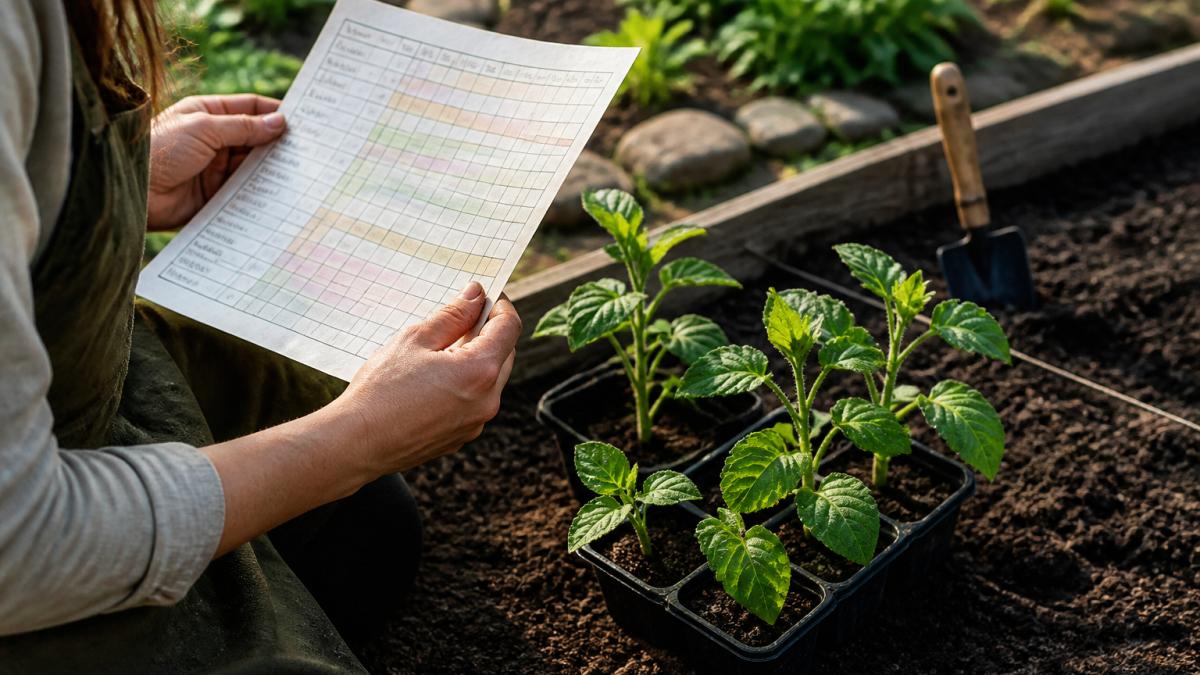
By March or April, depending on your region, you'll start seeds indoors or prepare beds for direct sowing. The calendar tells you the exact week.
Throughout the growing season, the calendar keeps you on track. In mid-summer, it reminds you that fall crops (lettuce, kale, root vegetables) need to be planted 8-10 weeks before your first frost.
Harvest when the calendar or your observation tells you the crop is ready.
By November or December, your first year is complete. Review what worked and what didn't. Update your notes. Next year, you'll use the same calendar but with the confidence of experience.
Herban Root and Remedy's seasonal guides and planting calendars are designed exactly for this workflow. You get a calendar customized to your location, plus context for understanding why the dates matter.
Starting a vegetable garden feels overwhelming until you have a plan. Herban Root and Remedy combines location-based planting calendars with hundreds of tested growing guides so you can move from planning to harvest with confidence. Join the Community and access seasonal guides built for your climate and your goals.
Frequently Asked Questions
What's the best seasonal gardening calendar for beginners?
The best calendar depends on your growing zone and space. Location-based calendars (customized by ZIP code or frost dates) work better than generic month-by-month guides because they account for your local climate. Beginners benefit from calendars that show both when to start seeds indoors and when to transplant outdoors. Choose one that matches your growing style, whether you prefer a printed calendar for your kitchen wall or a digital app you can check on your phone.
How do I know when to start seeds indoors using a seed starting calendar for vegetables?
A seed starting calendar tells you how many weeks before your last spring frost to start seeds indoors. Most calendars count backward from your local frost date. For example, tomatoes typically need 6-8 weeks of indoor growing before transplanting outside. Your regional calendar should list each vegetable with its specific timing. If you're unsure of your frost date, enter your ZIP code into a location-based calendar to find it.
Can I use the same vegetable planting calendar by month if I move to a different region?
No. A generic month-by-month calendar won't work across regions because frost dates, growing seasons, and temperature ranges vary widely. A vegetable planting calendar by month designed for one climate zone can lead to planting too early (frost kills seedlings) or too late (short growing season). Always use a regional planting calendar customized to your location, or adjust a generic calendar by checking your local frost dates and growing zone first.
Should I use a garden planner app with planting calendar or stick with paper?
Both work. A garden planner app with planting calendar offers reminders, tracking, and easy adjustments as seasons change. Paper calendars are reliable, offline, and don't require subscriptions or passwords. Many beginners start with paper to learn the rhythm of their garden, then switch to an app for convenience. The choice depends on your comfort with technology and how much detail you want to track.
What should I do if my region has unpredictable weather or microclimates?
Start by using your regional planting calendar as a baseline, then watch your specific garden conditions. A microclimate, like a sheltered south-facing bed or a frost-prone low spot, can shift your planting dates by 1-2 weeks. Keep notes on what happens each year: frost dates, soil temperature, and plant performance. After your first season, you'll have real data to adjust next year's calendar. This is how experienced gardeners refine their timing over time.