ultimate-guide
Pass Farm Knowledge Between Generations: A 2026 Guide
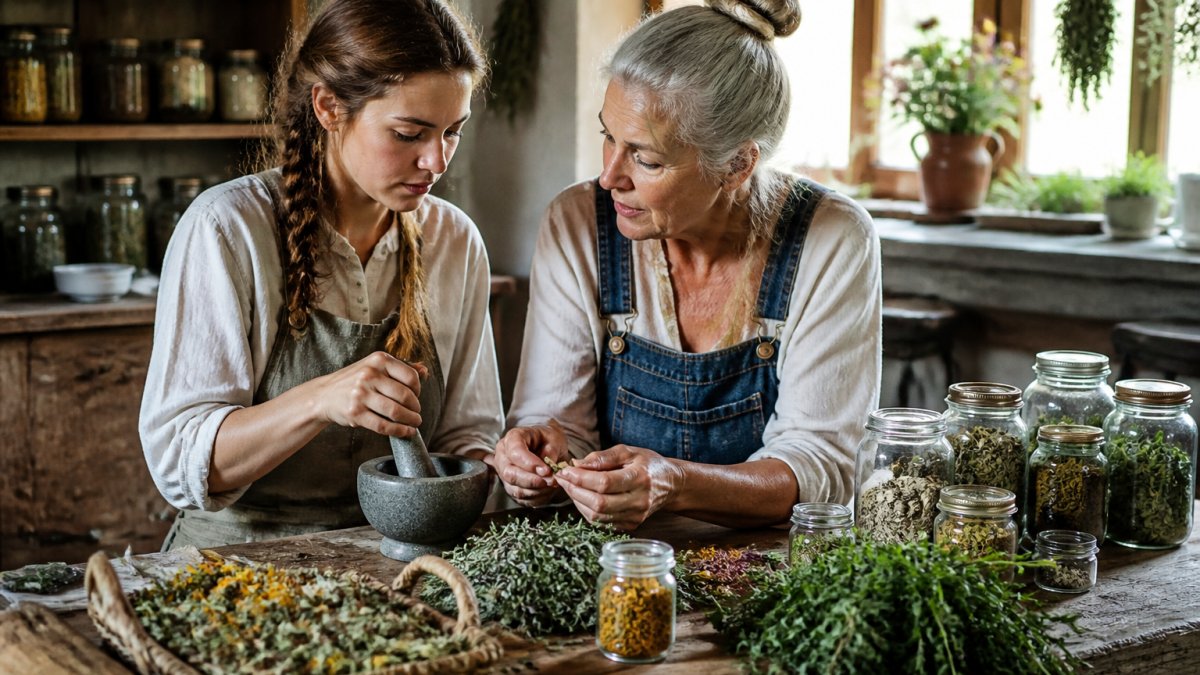
Table of Contents
- Why Passing Farm Knowledge Between Generations Matters
- Traditional Agricultural Knowledge: Building Your Foundation
- Food Preservation Skills: Hands-On Teaching Methods
- Family Recipe Documentation: Creating Your Knowledge Archive
- Teaching Children to Grow Food: From Seed to Harvest
- Blending Oral Tradition with Digital Documentation
- Measuring Knowledge Retention and Adjusting Your Approach
- Overcoming Barriers to Intergenerational Learning
- Frequently Asked Questions
Last Updated: October 12, 2026
Why Passing Farm Knowledge Between Generations Matters
The ability to pass farm knowledge between generations is disappearing faster than many realize. When elders who grew up with hands-on agricultural skills retire or pass away, their lived experience, the intuition about when soil is ready, how to read weather patterns, which seeds thrive in your specific microclimate, often vanishes with them.
Intergenerational learning isn't nostalgia. It's practical survival. When you learn food preservation from someone who's done it for decades, you absorb the small adjustments that textbooks never mention, how humidity affects fermentation, why your grandmother's timing worked better than the recipe says, what to do when something goes slightly wrong. This oral tradition, combined with documented methods, creates a resilience that no single source can provide.
The real challenge isn't finding information. It's transferring embodied knowledge, the kind that lives in muscle memory, intuition, and seasonal rhythm. That transfer requires intentional structures, patience, and a willingness to blend traditional methods with modern documentation so knowledge doesn't depend on one person's memory.
Traditional Agricultural Knowledge: Building Your Foundation
Traditional agricultural knowledge is the accumulated understanding of how to work with land, plants, and seasons in your specific place. It's not generic, it's shaped by local soil, climate, pests, and the particular rhythms of your region. This knowledge, passed down through family farming traditions, represents centuries of observation and adjustment.
Start by documenting what the elders in your family already know. Have conversations with grandparents, older relatives, or neighbors who've farmed for decades.
The foundation of intergenerational knowledge transfer is understanding that traditional methods developed because they work within constraints. Traditional methods often developed because they worked within constraints, such as limited availability or affordability of certain resources. That limitation often forced innovation.
Create a simple reference document, handwritten or digital, that captures these observations. Note the timing of local frost dates, the plants that thrive without amendment, the pests that show up predictably. This becomes your baseline. From here, you can test, adjust, and add your own observations while honoring what came before.
Food Preservation Skills: Hands-On Teaching Methods
Food preservation skills are where oral tradition and hands-on practice intersect most directly. These techniques, fermentation, drying, cold storage, infusions, cannot be learned from reading alone.
Teach preservation through direct participation, not instruction. Have children or younger adults present during every step: selecting produce, preparing it, monitoring fermentation, tasting at different stages. Let them feel the brine, smell the changes, taste the progression from fresh to preserved.
Create a seasonal rhythm where preservation happens at predictable times. If you ferment every August when cucumbers peak, that becomes an expected event, a time when knowledge transfer happens naturally. If you dry herbs in July, preserve berries in June, make infusions in September, these become anchors in the year.
Document your family's specific variations. Your fermentation might use different vegetables, different salt ratios, or different timing than a standard recipe. Writing these down alongside notes about why you make those choices honors your family's foodways while creating a reference future generations can follow.
Family Recipe Documentation: Creating Your Knowledge Archive
Family recipe documentation is more than writing down ingredients and steps. It's capturing the reasoning, the adjustments, the stories, and the variations that make a recipe yours rather than generic.
Start with recipes that matter, the ones your family makes repeatedly, the ones that carry memory or meaning. For each, write not just what goes in, but the context. When do you make it? What season, what occasion?
Use a format that works for your household. Some families prefer handwritten cards in a box. Others use a shared digital document. Some create a combination, handwritten originals photographed and stored digitally for backup.
Include notes about substitutions and adaptations. If a recipe calls for an ingredient you don't grow or use, what do you actually use instead? If proportions have been adjusted based on taste preference, write that down.
Invite younger family members to add their own notes and experiments to the archive. When they make a recipe and discover something useful, have them write it down. This transforms documentation from a one-way transfer into an active conversation across generations.
Teaching Children to Grow Food: From Seed to Harvest
Children learn to grow food best through hands-on responsibility, not observation. Assign them a specific area, a bed, a set of containers, a corner of the garden, that is theirs to tend.
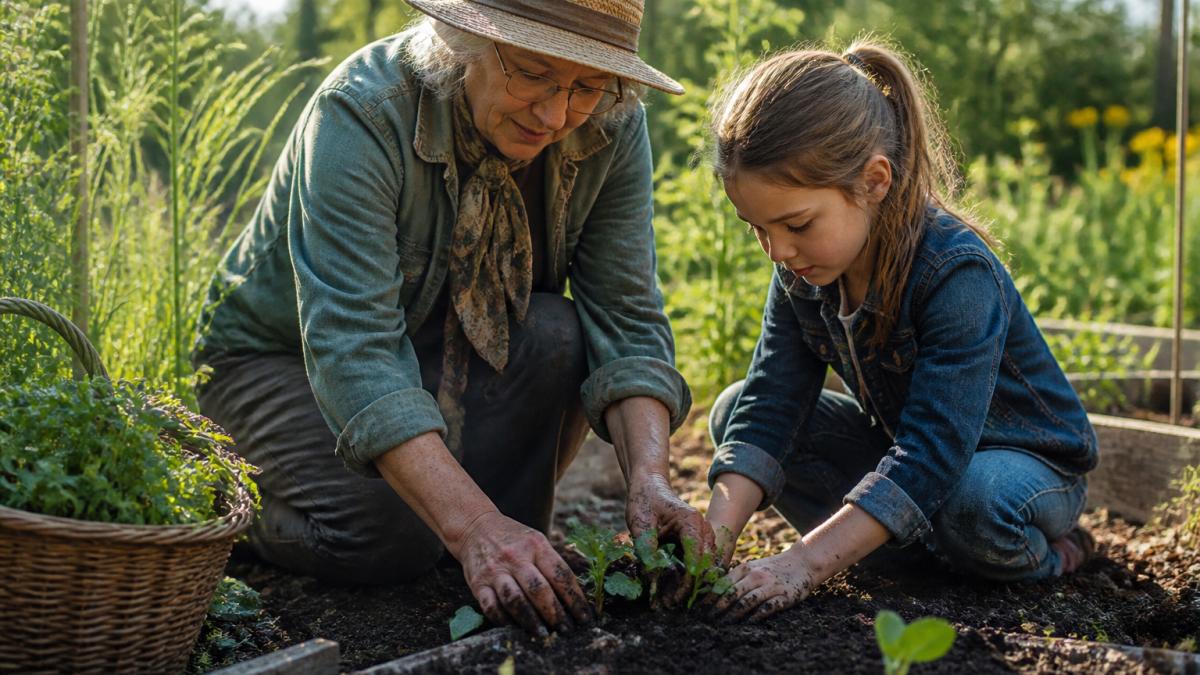
Start with seeds they can see and handle. Large seeds like beans, squash, or sunflowers are more rewarding than tiny carrot seeds. Let them plant too deep, plant too shallow, plant too close together.
Create a simple record system, a notebook or photo log where they track what they planted, when, and what happened. This builds observation skills and creates a reference for next season.
Involve them in the full cycle: seed selection, planting, watering, weeding, harvesting, and eating. When they taste something they grew themselves, the knowledge becomes personal.
Teach them to save seeds from successful plants. Show them how to identify mature seed pods, how to harvest and dry them, how to store them for next year.
Blending Oral Tradition with Digital Documentation
The most resilient knowledge systems combine oral tradition with documentation. Oral teaching captures nuance, timing, and intuition. Digital documentation ensures knowledge survives if someone moves, gets busy, or passes away.
Record video of someone demonstrating a skill, fermenting, preserving, preparing a family recipe, planting seeds. Short, focused videos (3-10 minutes) work better than long ones. Film the hands, the process, the small adjustments. Include audio of them explaining why they do each step.
Create a simple digital archive, a folder or shared document where recipes, growing notes, preservation techniques, and seasonal guides live. Include photos of the actual process, not just written instructions. Photos of fermentation at different stages, herbs at harvest time, the garden layout in different seasons.
Herban Root and Remedy's approach to digital documentation honors this blend: hand-annotated field journals and recipe cards translated into digital format, preserving the original voice and reasoning while making the knowledge accessible and searchable.
Use simple tools. A shared Google Doc, a private blog, a photo album with captions, these work as well as expensive software. The goal is accessibility and longevity, not sophistication.
Measuring Knowledge Retention and Adjusting Your Approach
You can't assume knowledge has transferred just because you've taught it. Build simple checks into your regular rhythm.
Ask younger family members to explain why you do something, not just how. "Why do we ferment vegetables in brine rather than vinegar?" If they can answer with reasoning rather than just repeating instructions, the knowledge has stuck.
Watch for independent application. When someone takes a technique you've taught and applies it to a new situation, adapting a fermentation method to a different vegetable, adjusting planting timing based on their own observation of weather, that signals real knowledge transfer.
Create seasonal rituals where knowledge gets practiced and refined together. If you ferment every August, that's an opportunity to see who remembers the process, who needs refreshing, and who's ready to lead.
Document what works and what doesn't in your teaching approach. If video works better than written instruction for your family, use more video. If hands-on practice without explanation creates confusion, add more discussion. If people forget techniques between seasons, create simpler checklists or more frequent practice.
Overcoming Barriers to Intergenerational Learning
The biggest barrier is usually time and competing priorities. Modern life pulls families in different directions. Elders are busy. Young people have jobs, school, other commitments. Intentional knowledge transfer requires carving out time when it's not guaranteed to happen naturally.
Start small. One preserved food item per season. One garden bed per child. One documented recipe per month. These modest commitments create consistent touchpoints without overwhelming anyone.
Distance is another barrier. If elders live far away, you can't rely on regular in-person teaching. Video calls, recorded demonstrations, and detailed written documentation become more important.
Skepticism about traditional methods can create friction. If younger people see chemical fertilizers as "better" or modern techniques as "more efficient," they may dismiss traditional approaches without understanding them.
Different learning styles require different teaching approaches. Some people learn by doing, others by watching, others by reading and discussing.
Passing knowledge between generations isn't a project with a finish line, it's a practice you build into how your family lives. When food preservation happens seasonally, when gardening involves everyone, when recipes are written down and tasted together, when elders are asked for their reasoning and their observations are recorded, knowledge transfer becomes natural rather than forced.
Herban Root and Remedy supports this work by providing documented recipes, seasonal guides, and practical instructions across gardening, food preservation, and natural apothecary, resources that honor traditional knowledge while making it accessible and searchable.
Frequently Asked Questions
What does farm-to-table mean for a homestead?
Farm-to-table for a homestead means growing, harvesting, preserving, and preparing food from your own land or garden without relying on commercial supply chains. It encompasses the entire cycle from seed selection and cultivation through harvesting, food preservation, and cooking scratch-made meals. This approach connects you directly to seasonal rhythms, teaches where food actually comes from, and creates natural opportunities to pass agricultural knowledge and foodways to younger family members.
How can families pass gardening and food-preservation skills to the next generation?
The most effective method combines hands-on practice with storytelling. Work alongside children during planting, weeding, harvesting, and food preservation tasks so they learn through lived experience, not just instruction. Document your methods in writing and photos alongside oral teaching. Share the 'why' behind each step, explain seasonal timing, and let them make mistakes in a safe environment. Regular, repeated exposure across seasons builds muscle memory and confidence. Creating a family recipe archive also preserves your specific methods and wisdom.
What traditional agricultural knowledge is useful for modern homesteaders?
Traditional knowledge includes crop rotation practices, seed saving and stewardship, seasonal planting calendars, natural pest management, companion planting, and water conservation techniques. Indigenous and ancestral foodways offer insights into food preparation, fermentation, preservation without modern chemicals, and working with local ecosystems and biodiversity. These methods often require less external input, build soil health over time, and align with chemical-free living. Many traditional practices also reflect deep understanding of local climate and land stewardship accumulated over generations.
How can you document family recipes and gardening methods so knowledge isn't lost?
Create a written archive of your family recipes, gardening techniques, and seasonal practices using hand-written notes, typed documents, or digital photos. Include ingredient lists, step-by-step instructions, timing notes, and the story or origin of each recipe or method. A combination of digital documentation alongside oral teaching works best: record video of elders explaining techniques, photograph your garden at different seasons, and maintain a planting journal. This hybrid approach preserves knowledge while honoring the oral tradition and lived experience that makes the knowledge truly stick.
What are practical ways to teach children where food comes from?
Start with seed selection and planting so children see the full cycle from start to finish. Involve them in watering, weeding, and pest management so they understand the work required. Have them harvest their own vegetables and participate in food preparation and preservation. Take them to farmers markets or other local food sources. Cook meals together using ingredients you've grown or preserved. Tell stories about why your family grows certain foods and how recipes have been passed down. Make it sensory and seasonal so knowledge becomes embodied rather than abstract.
Why is intergenerational knowledge important in local food systems?
Intergenerational knowledge transfer preserves agricultural heritage, foodways, and land stewardship practices that have proven sustainable over decades or centuries. When younger generations learn directly from elders and knowledge keepers, they gain not just techniques but understanding of why those methods work in your specific climate and soil. This knowledge strengthens local food resilience, reduces dependence on commercial systems, and deepens connection to land and community. It also ensures that tested, safe food preservation and preparation methods continue rather than being lost to corporate or industrial food systems.
How can traditional agricultural knowledge work alongside modern methods?
Traditional and modern approaches are not opposites. You can use ancestral seed-saving techniques while also accessing modern heirloom seed sources. Combine traditional crop rotation with soil testing. Use hand tools and observation-based pest management alongside targeted, organic interventions if needed. Document your family's methods digitally while maintaining oral teaching. Respect Indigenous knowledge sovereignty when learning from traditional food systems. The goal is selecting what serves your goals for chemical-free, self-sustaining living while honoring the knowledge keepers and the land itself.