ultimate-guide
How to Teach Seasonal Farm Skills to the Next Generation
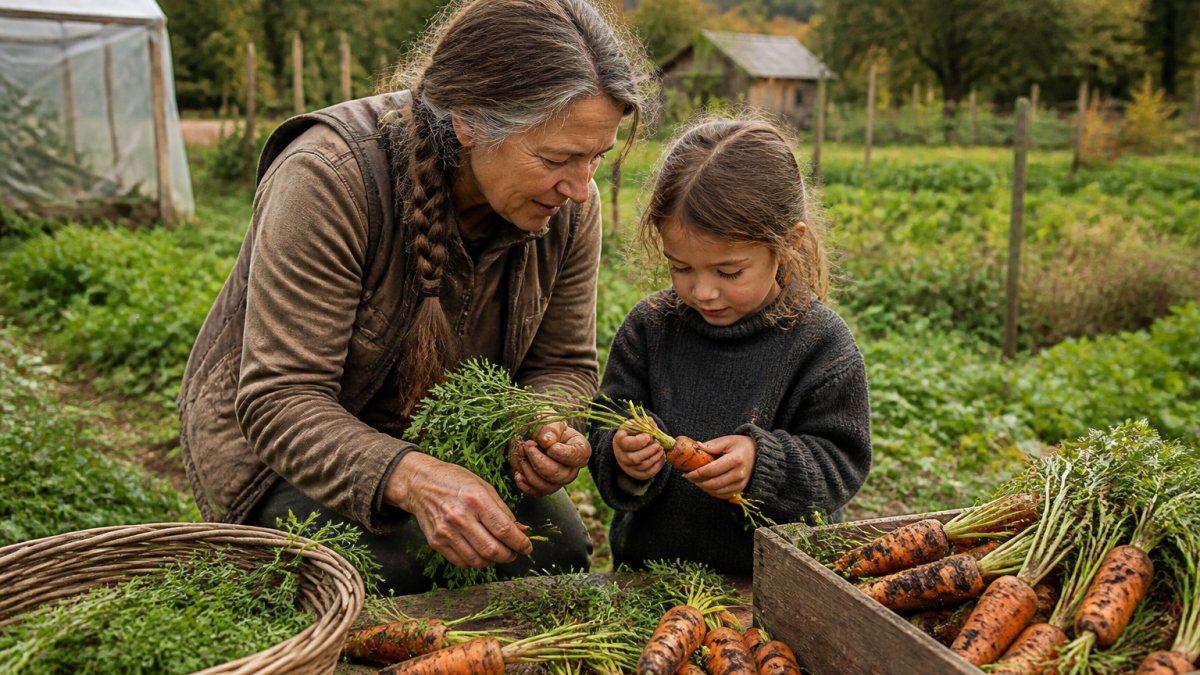
Last Updated: November 2, 2026
Quick Summary
Seasonal farm skills are the practical knowledge of how land, weather, and food move together across the year. Teach them by letting each season set the lesson: soil and seeds in spring, watering and harvest in summer, and reflection in autumn. Children learn best through hands-on work they can see and taste.
- Spring is the season to teach soil first, then sowing lettuce and peas and starting tomatoes indoors.
- Summer teaches watering at the base of plants in the morning and keeping a simple observation log.
- Start food preservation with drying herbs in a warm, airy, shaded spot away from direct sun.
- Give children child-sized tools and teach safe handling before letting them use anything sharp.
- Always have an adult supervise any food preservation method that involves heat or pressure.
Table of Contents
- Why Seasonal Farm Skills Matter for the Next Generation
- Start with Homesteading Skills for Kids Rooted in the Seasons
- How to Teach Food Preservation to Children Step by Step
- Essential Farm Tools for Young Learners and How to Use Them Safely
- Building Natural Apothecary Skills for Homesteaders Across Generations
- Making Seasonal Learning Engaging for Young Farmers
- Start Your Family's Seasonal Learning Plan This Season
- Frequently Asked Questions
Why Seasonal Farm Skills Matter for the Next Generation
Seasonal farm skills are the practical knowledge of how land, weather, and food move together across the year, and they are the part of homesteading that most often gets lost when a family stops growing its own food. At Herban Root and Remedy, we see the next generation as the people who will carry these skills forward, which is why we built our resources around passing knowledge down rather than simply handing over instructions.
The case for teaching them is strong. Agricultural researchers writing in the journal Agriculture (Non-Technical Skills Needed for the Current and Next-Generation Agricultural Workforce) identify communication, teamwork, problem-solving, and cross-cultural competence as core competencies for people working the land today. Those are not abstract qualities. They are what lets a young person coordinate a planting schedule with family, adapt when a late frost arrives, and keep a garden productive across seasons.
Learning by doing matters most. Penn State Extension reports that next-generation farmers often prefer on-farm trials and learning by watching other growers work (Learning Preferences of Next Generation Farmers). A child who helps sow a bed in April and then tastes its first harvest in July understands the calendar in a way no chart can teach.
Start with Homesteading Skills for Kids Rooted in the Seasons
The most effective way to begin is to let the year itself set the lesson plan. Children learn fastest when each task has an obvious place in the season, so the work feels necessary rather than like homework. Start with one bed or one container, and let the crop calendar decide what gets taught next.
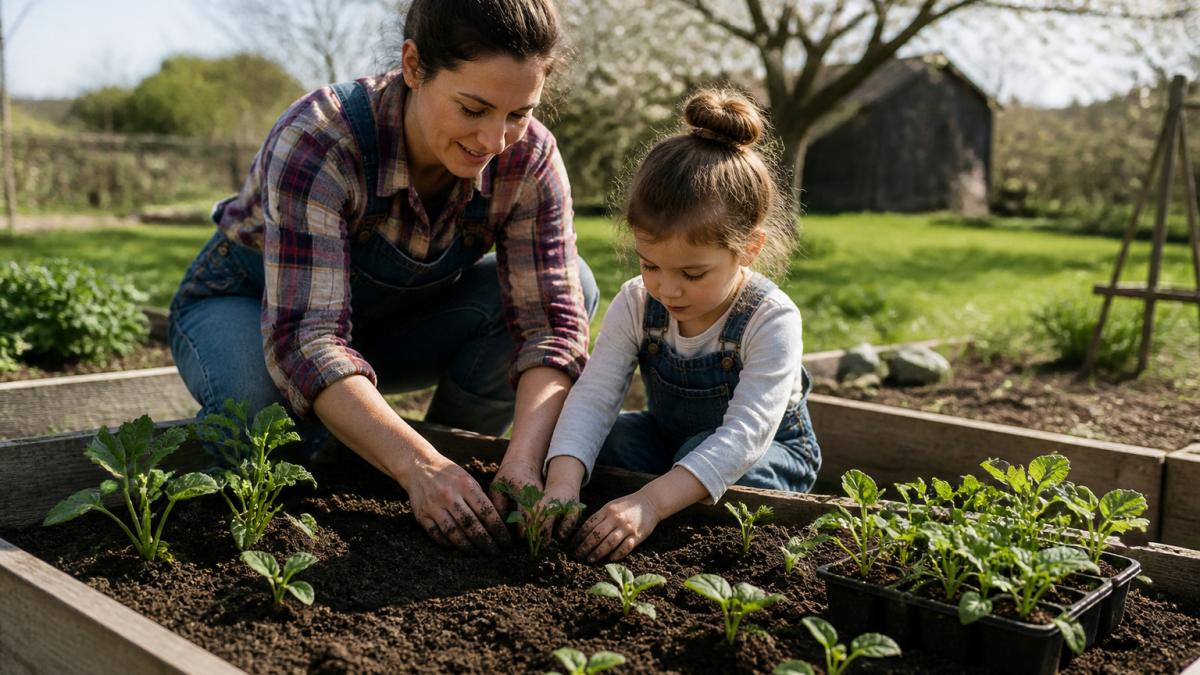
Keep the first projects small and visible. A windowsill herb pot, a row of radishes, or a single tomato plant gives a child something to check every day and a clear result to point to. Homesteading skills for kids grow naturally from that kind of ownership.
Spring: Soil, Seeds and Early Planting
Spring is the season to teach soil first. Have children feel the texture of moist garden soil, notice how it crumbles or clumps, and learn why compost matters before anything is planted. Then move to seeds: sowing shallow crops like lettuce and peas directly, and starting tomatoes and peppers indoors so they are ready to transplant after the last frost. Growing tomatoes from seed indoors walks through the timing for a head start.
Summer and Autumn: Watering, Harvest and Timing
Summer teaches watering and observation. Children can check soil moisture with a finger, learn to water at the base of plants in the morning, and keep a simple log of what they see. Harvest is the reward, but it is also a lesson in timing: beans picked young keep producing, while zucchini left too long turns woody.
Autumn is the season for reflection. Ask children to review the notes they kept, identify what worked, and decide what to change next year. Pairing crops that support each other also teaches observation.
The table below summarises the seasonal activities the article suggests for each part of the year, so families can plan which skills to teach when.
| Season | Skill to teach | Focus |
|---|---|---|
| Spring | Soil and seeds | Feel soil texture, sow lettuce and peas, start tomatoes indoors |
| Summer | Watering and observation | Check moisture by finger, water at plant base in morning, keep a log |
| Summer | Harvest timing | Pick beans young; zucchini left too long turns woody |
| Autumn | Reflection | Review notes, identify what worked, plan changes for next year |
How to Teach Food Preservation to Children Step by Step
Food preservation is one of the most valuable seasonal skills, and children can take part safely at every stage. Begin with low-risk methods like drying herbs, then move to other techniques as their judgment matures.
- Harvest at peak quality. Pick herbs in the morning after dew has dried, when their oils are strongest.
- Clean and sort. Remove damaged leaves and rinse only if necessary, then pat completely dry.
- Dry in a warm, airy, shaded spot. Hang small bundles upside down or lay leaves on a screen, away from direct sun.
- Check for full dryness. Leaves should crumble easily between the fingers with no soft spots.
- Store in labeled, airtight containers kept away from light and heat, and write the date on each jar.
Always have an adult supervise any method that involves heat or pressure. (Source: next-generation farmers often prefer on-farm trials and learning by watching other growers work)
Essential Farm Tools for Young Learners and How to Use Them Safely
Good tools make the work easier to learn, but they also carry real risk for small hands. Choose child-sized implements where you can, and teach handling before you hand over anything sharp.
Core tools for young learners include a hand trowel, a short-handled hoe, a watering can with a fine rose, gardening gloves, and a pair of child-safe pruners. Show children how to carry tools point-down, how to hang them back up, and how to keep their feet clear when swinging a hoe. Store tools in one place near the garden so cleanup becomes part of the routine.
Set clear rules from the start. No tool is used without an adult nearby until the child has demonstrated control. Work gloves protect against splinters and soil-borne irritants, and sun protection matters on long summer days.
Building Natural Apothecary Skills for Homesteaders Across Generations
Natural apothecary skills are the knowledge of how to grow, dry, and prepare herbs, and they are among the most meaningful things to pass down.
Teach children to identify each plant by leaf and smell before they learn any use for it, and keep a written record of what each herb is grown for in your household. Planting a medicinal herb garden gives you the raw materials for teas and remedies.
Remedies deserve caution. Anything prepared for ingestion or applied to skin should be researched carefully, and anyone who is pregnant, nursing, managing a medical condition, or giving remedies to young children should check with a qualified healthcare provider first. Our recipes and instructions are a starting point for learning, not a substitute for professional advice.
Making Seasonal Learning Engaging for Young Farmers
Children stay interested when the work produces something they can see, taste, or share. Give each child a garden journal and let them draw what they plant, record weather, and note what happens. A simple chart of the year's tasks, posted where the whole family sees it, keeps everyone oriented.
Turn harvests into shared meals. When a child's radishes end up on the dinner table, the connection between effort and food becomes concrete. Invite grandparents and neighbors to share what they remember about seasonal work, since passing knowledge between generations is part of what makes these skills last.
Rotate responsibilities so children experience the whole cycle, from planting to preserving. Recognize effort more than perfection. A crop that failed is still a lesson, and a child who understands why it failed has learned something a successful harvest could not teach.
Start Your Family's Seasonal Learning Plan This Season
Begin with what the current season offers. If it is spring, plan one soil activity and one sowing project. If it is late summer, plan one harvest and one preservation task. Write the plan down, assign each child a piece of it, and review it together at the end of the month.
At Herban Root and Remedy, our resource covers gardening, scratch-made cooking, food preservation, and natural apothecary across six connected disciplines, with seasonal guides and planting calendars to match the year. Join the community to start building a learning plan your family can grow into over many seasons.
Frequently Asked Questions
What are the most important farm skills to teach children?
Start with the skills children can practise every week: planting and watering by season, recognising when vegetables are ready to pick, and keeping simple garden notes. These build observation and patience, which later support harder tasks like food preservation and tool care. Let children repeat each task across a full season so they see the results of their own work. Herban Root and Remedy's seasonal guides and planting calendars can be used to sequence these tasks, season by season, for the whole family.
How do you introduce seasonal homesteading tasks to beginners?
Follow the calendar rather than a textbook. Match each task to what is actually happening in the garden that week, such as sowing in spring, mulching in early summer, and harvesting and storing in autumn. Beginners learn fastest when a task has a visible result they can check. Keep a shared field journal so the family can compare what was done last year with what is happening now.
Why is it important to pass down traditional agricultural knowledge?
Much practical farm knowledge is learned by watching and doing, and it is easily lost when one generation stops farming. Recording methods in a family journal or recipe card keeps that knowledge usable long after the people who first wrote it are gone.
How can I make learning farm skills engaging for the next generation?
Make the work hands-on and give children a real job with a real outcome, such as harvesting the first radishes or labelling a jar of preserves they helped fill. Let them see and hear how experienced growers work, through garden walks or demonstrations. Short, regular sessions tied to the season keep interest high. Pair each task with a simple question, like why this crop is planted now, so children start thinking like growers rather than just following steps.
