how-to
How to Make Homemade Vanilla Extract: A Simple Guide
Last Updated: October 23, 2026
Quick Summary
To make homemade vanilla extract, split six to eight vanilla beans per cup of alcohol, place them in a clean glass jar, and cover fully with vodka or another spirit. Seal the jar, store it in a cool dark place, and shake weekly for at least six to eight weeks.
- Split each vanilla bean pod lengthwise so the seeds and oils meet the alcohol directly.
- Use plain, unflavored vodka around 70-80 proof as the neutral standard choice.
- The ratio to remember is about one ounce of beans per cup of alcohol.
- Keep beans fully submerged and top the jar up with the same spirit as you use it.
- Bury spent vanilla pods in granulated sugar for a week or two to make vanilla sugar.
Table of Contents
- Why Make Your Own Homemade Vanilla Extract
- What You'll Need: Beans, Alcohol, and Jars
- How to Make Vanilla Extract with Vodka
- The Homemade Vanilla Extract Ratio That Works
- How Long Does Homemade Vanilla Extract Take?
- How to Store Homemade Vanilla Extract
- Troubleshooting and Quality Control
- Using Leftover Beans and Making Vanilla Sugar
- Frequently Asked Questions
Why Make Your Own Homemade Vanilla Extract
Store-bought vanilla extract is one of the few pantry items where the ingredient list often reads like a chemistry set. Homemade vanilla extract is simply vanilla beans steeped in alcohol until the liquid takes on the bean's deep, sweet flavor.
At Herban Root and Remedy, we teach this as one of the first scratch-made pantry swaps for a reason. It removes an unknown from your kitchen and replaces it with something you made with your own hands.
The payoff goes beyond flavor. You control what goes in, you know how long it steeped, and you can scale the batch to your own baking habits.
What You'll Need: Beans, Alcohol, and Jars
The full setup is short: vanilla beans, alcohol, and a clean glass jar with a tight lid. That's it. No special equipment, no preservatives, no additives.
Here's the starter list:
- Vanilla beans: whole pods, plump and flexible
- Alcohol: vodka is the standard choice, but rum, bourbon, and brandy all work
- Glass jar or bottle: clean, dry, and airtight
- Sharp paring knife: for splitting the pods
- Small funnel: optional, but it helps when bottling
Choosing Your Vanilla Beans
Look for pods that are plump, oily, and bend without snapping. A dry, brittle bean has lost much of the moisture that carries flavor. Grade matters less than freshness for extract; you want aroma and flexibility over a perfect cosmetic look.
Plan on roughly six to eight whole beans per cup of alcohol for a full-strength extract. More beans means a richer, faster result. Fewer beans still works, it just needs longer.
Choosing Your Alcohol (and What to Do If You Avoid Alcohol)
Vodka is the default because it is neutral: it extracts vanilla's flavor without adding its own. Look for a plain, unflavored vodka around 70-80 proof (35-40% alcohol). That strength is high enough to preserve the extract and low enough not to taste harsh.
Other spirits work and each brings a character of its own:
- Rum: adds a warm, caramel sweetness that suits baking and desserts.
- Bourbon: contributes oak and vanilla-adjacent notes; good for custards and holiday baking.
- Brandy: rounder and fruitier; a common choice for gifting.
A common pattern among experienced makers is to keep one neutral batch (vodka) for everyday use and one character batch (rum or bourbon) for specific recipes. Label both so you can compare.
If you avoid alcohol, understand that true vanilla extract relies on alcohol as both solvent and preservative. An alcohol-free version is a different product: it is typically a glycerin or water-based infusion that must be refrigerated and used within a few weeks.
Picking the Right Glass Jar or Bottle
Use a clean glass jar with a lid that seals tight. Glass won't react with the alcohol, and a good seal keeps the alcohol from evaporating over the months ahead. A wide-mouth quart jar is the easiest to work with because you can reach inside to add or remove beans.
Wash and dry the jar completely before you start. Any lingering moisture or soap residue can cloud the extract.
How to Make Vanilla Extract with Vodka
The process itself takes about ten minutes of hands-on work. The rest is patience.
- Split each vanilla bean pod lengthwise with a sharp paring knife. Keep the pod intact; you're opening it, not chopping it.
- Scrape the tiny seeds, the vanilla bean caviar, into the jar if you like. Some people leave the seeds in the pod. Either way works.
- Place the split pods into the clean glass jar.
- Pour vodka over the beans until they're fully covered, leaving a little headspace at the top.
- Seal the lid tightly and give the jar a gentle shake.
- Store it in a cool, dark place and shake it once a week.
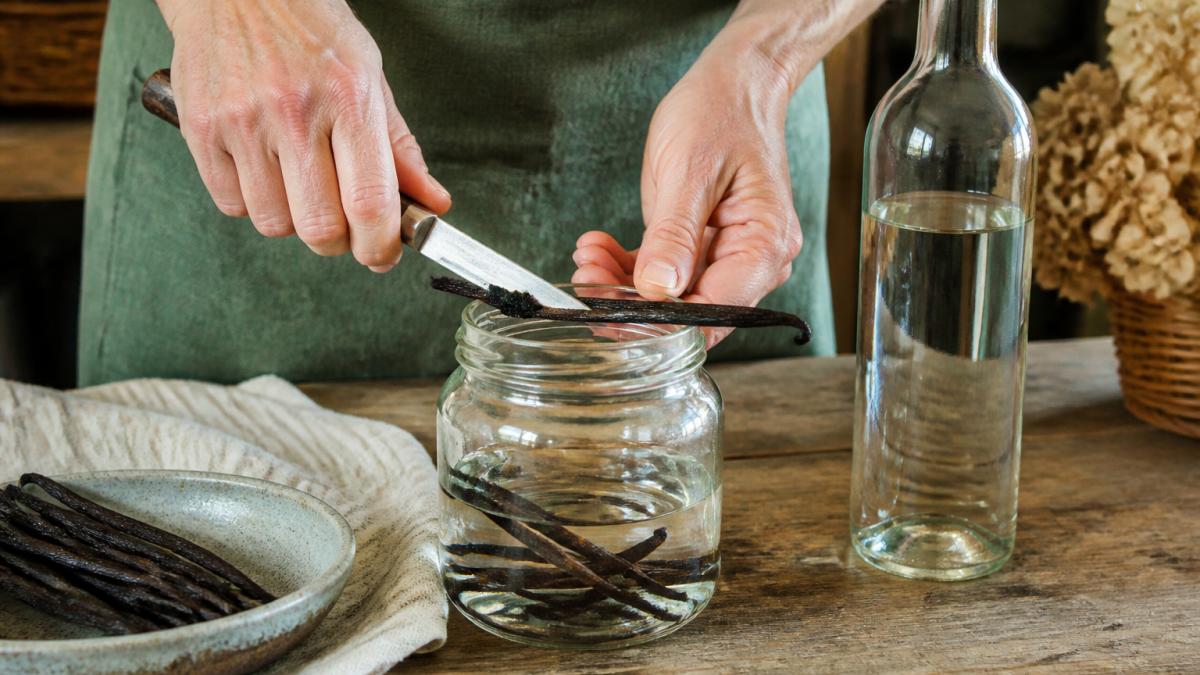
Splitting the pods is the step most people skip, and it's the one that matters most. A whole bean releases flavor slowly through its skin. A split bean exposes the seeds and oils directly to the alcohol, so the extract develops faster and deeper.
The Homemade Vanilla Extract Ratio That Works
The ratio is the single most useful number to remember: about one ounce of beans to one cup of alcohol. That's roughly six to eight whole pods per cup. This homemade vanilla extract ratio gives you a full-strength extract without wasting beans.
| Beans (whole pods) | Alcohol | Steeping Time | Strength |
|---|---|---|---|
| 6-8 pods | 1 cup | 6-8 weeks | Full |
| 4-5 pods | 1 cup | 3-6 months | Medium |
| 10-12 pods | 1 cup | 4-6 weeks | Extra rich |
Scale the batch up or down with the same proportion. If you want a stronger extract, add more beans rather than more time. Time deepens flavor, but bean quantity sets the ceiling.
How Long Does Homemade Vanilla Extract Take?
Plan on at least six to eight weeks before the extract is ready to use. Many makers wait three to six months for a fuller flavor. The exact timing depends on how many beans you used and how warm your storage spot stays.
You'll know it's ready when the liquid smells strongly of vanilla and has darkened to a deep amber or brown. Taste a drop. If it's flat, give it more time.
The good news: there's no hard deadline. A jar left steeping longer only improves. The bad news: rushing it gives you vodka with a faint vanilla whisper, not extract.
How to Store Homemade Vanilla Extract
Store the jar in a cool, dark place, like a pantry shelf away from the stove. Heat and light both degrade flavor over time. A dark glass bottle helps, though a clear jar kept in a closed cupboard works fine.
Shake the jar once a week for the first couple of months, then monthly after that. As you use the extract, top the jar up with more alcohol to keep the beans covered. This keeps the batch going almost indefinitely.
Food Safety, Bottling, and Shelf Life
Homemade extract is safe because the alcohol does the preserving. Keep these rules in mind:
- Keep beans submerged. Beans exposed to air can grow mold. Push them down or add more alcohol.
- Use clean, dry bottles. Wash and fully dry glass bottles before filling. Residual moisture dilutes the alcohol and invites spoilage.
- Maintain alcohol strength. If you top up repeatedly with water or a low-proof spirit, the preservative effect weakens. Top up with the same spirit you started with.
- Seal tightly. Alcohol evaporates; a loose cap means a weaker, flatter extract over time.
When you're ready to bottle, use small dark glass bottles with tight caps. Label each with the date and the spirit used. A cool, dark pantry keeps bottled extract at its best for a long stretch, many makers find a well-made batch holds quality for a year or more, though flavor gradually softens.
Signs of spoilage to watch for: mold on floating beans, an off or sour smell, or a cloudy liquid that does not settle. If you see mold, discard the batch and start fresh with clean equipment.
Troubleshooting and Quality Control
Most extract problems come down to three things: weak flavor, cloudy liquid, or a jar that never seems to darken. Each has a straightforward fix.
- Weak flavor: Add more split beans. Bean quantity, not time, sets the strength.
- Cloudy extract: Usually harmless. It can come from bean sediment or a jar that wasn't fully dry. Let it settle and strain if it bothers you.
- Slow darkening: Move the jar somewhere slightly warmer and shake more often. Cool spots slow the process.
- Faint alcohol smell that never fades: Give it more weeks. Under-steeping is the most common cause.
For food safety, keep the beans fully submerged in alcohol at all times. Alcohol is what protects the extract from spoiling. If beans poke above the surface, push them down or add more liquid.
Using Leftover Beans and Making Vanilla Sugar
Don't toss spent beans after bottling. They still carry flavor and have plenty of uses.
- Drop a spent pod into a jar of granulated sugar to make vanilla sugar
- Add spent beans to a pot of simmering milk for custards and puddings
- Tuck them into a jar of coffee beans for a subtle vanilla note
- Grind dried spent pods into a fine powder for baking
Vanilla sugar is the easiest win. Bury one or two spent pods in a jar of sugar, seal it, and let it sit for a week or two. The sugar picks up the vanilla aroma and works beautifully in coffee, baked goods, and holiday gifts. This is the same kind of small, tested kitchen habit we build into every guide at Herban Root and Remedy, where scratch-made staples and traditional preservation methods sit side by side.
Making homemade vanilla extract asks for three ingredients and a bit of patience, but the reward is a pantry staple you fully understand. The real challenge is consistency: remembering to shake the jar, top it up, and start the next batch before the first runs low. That's the kind of steady, seasonal rhythm Herban Root and Remedy was built around. Our ad-free platform gathers tested recipes, preservation methods, and scratch-made pantry guides in one private space, with seasonal calendars to keep your kitchen projects on track.
Frequently Asked Questions
How long does it take to make homemade vanilla extract?
Homemade vanilla extract needs at least six months to develop full flavor. You can start using it after two months, but the flavor will be weaker. For the best results, let the beans steep for a full six months in a cool, dark place, shaking the jar every week or two. Some makers age it for a year or more for a deeper, richer extract.
What is the best homemade vanilla extract ratio of beans to alcohol?
A common and reliable homemade vanilla extract ratio is about 6 to 8 vanilla beans per 8 ounces (about 240 millilitres) of alcohol. This gives a strong, pure vanilla flavor. If you use more beans, the extract will be more concentrated. If you use fewer, it will be milder. Adjust based on your taste and the strength of your beans.
Can you make vanilla extract without vodka?
Yes, you can make vanilla extract without vodka. Use other food-grade alcohols like rum, bourbon, or brandy for different flavor profiles. For an alcohol-free version, you can use food-grade glycerin or a mixture of glycerin and water, though the flavor will be different and it may not last as long. Always use food-safe ingredients.
How should homemade vanilla extract be stored?
Store homemade vanilla extract in a clean glass jar or bottle with an airtight lid. Keep it in a cool, dark place like a pantry cupboard, away from direct sunlight and heat. Shake it occasionally. Properly stored, it can last for years. You can top it off with more alcohol as you use it to keep the beans covered.
