how-to
How to Make Elderberry Gummies with Natural Flavor Variations
Last Updated: October 30, 2026
Quick Summary
Natural flavor variations for elderberry gummies come from balancing three levers: tart juices like pomegranate or lemon, sweet juices like apple or pear, and warm spices like ginger or cinnamon. A reliable small batch uses 3 parts finished elderberry syrup to 1 part juice, tasted and adjusted before molding.
- Group juices by role, then combine one tart or rounded juice with a small amount of warm spice.
- Keep total liquid the same when swapping in juice so your gelling agent still sets properly.
- Use 100% juice, not juice drinks with added sugar and flavoring.
- Agar is the most reliable gelatin-free setting agent and needs a full boil to activate.
- Taste the warm mix before pouring and note each change on your recipe card.
Table of Contents
- Why Flavor Matters in Homemade Elderberry Gummies
- What Flavors Complement Elderberry: A Balancing Guide
- Homemade Elderberry Gummies with Fruit Juice Blends
- Elderberry Gummies with Lemon and Ginger
- Gelatin-Free Elderberry Gummies: Agar and Other Setting Agents
- How Flavor Choices Affect Set, Texture, and Storage
- Troubleshooting Flavors That Turn Out Too Tart or Too Soft
- Start Your First Small Batch with Herban Root and Remedy
- Frequently Asked Questions
Why Flavor Matters in Homemade Elderberry Gummies
Elderberry gummies only work as a daily habit if your family actually wants to eat them.
At Herban Root and Remedy, flavor is part of the recipe, not an afterthought.
Elderberry is the base note, not the whole song.
A common mistake is dumping in more honey to fix tartness.
We'll show you how to build flavor combinations that hold up, plus ratios, setting agents, and fixes when a batch goes wrong.
What Flavors Complement Elderberry: A Balancing Guide
The flavors that complement elderberry fall into three groups: tart, sweet, and spiced. Tart fruits brighten the deep berry flavor, sweet elements soften it, and spices add warmth without masking the elderberry.
Elderberry sits between blackberry and dark cherry, with a slightly bitter edge. That edge is why raw elderberry syrup tastes so strong.
Tart, Sweet, and Spiced: The Three Levers
Think of every batch as three levers you can pull. Most failed batches pull only one.
- Tart: lemon juice, lime, cranberry, pomegranate, tart apple
- Sweet: honey, unrefined sugar, grape juice, apple juice, ripe pear
- Spiced: cinnamon, ginger, clove, star anise, cardamom
Pull sweet too hard and the elderberry gets lost. Pull tart too hard and kids may refuse it.
A good starting point for a small batch: mostly elderberry base, a quarter part sweet juice, and a squeeze of lemon. Taste the warm mix before it goes into molds.
Homemade Elderberry Gummies with Fruit Juice Blends
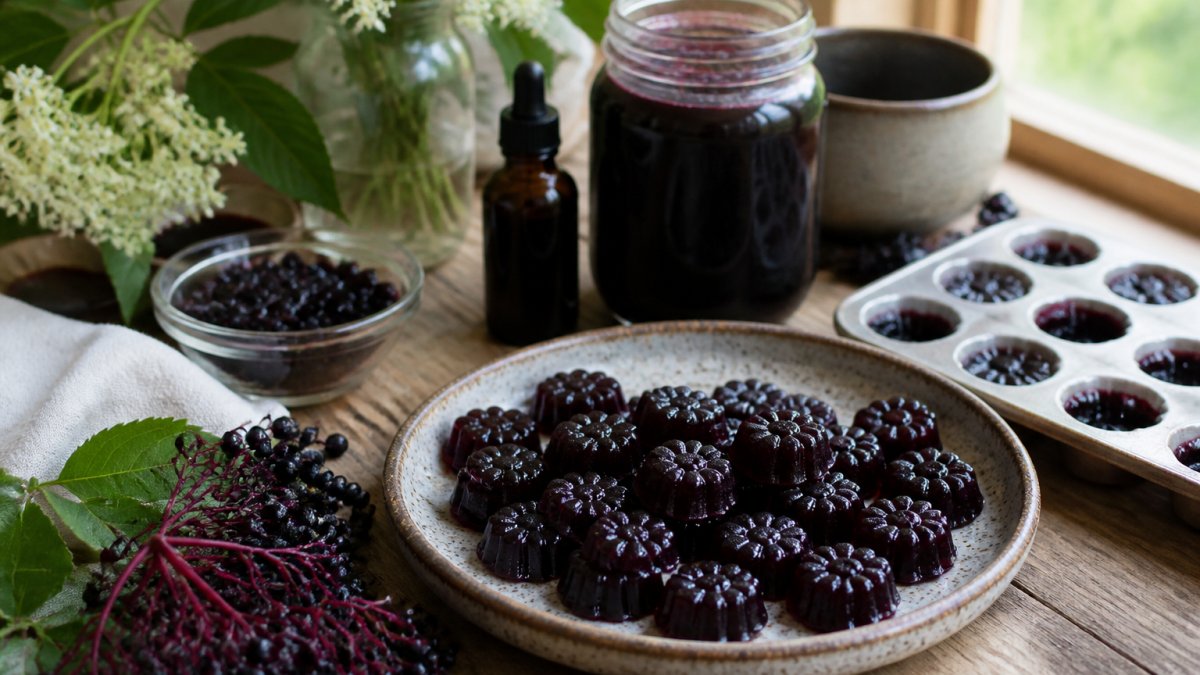
Fruit juice is the easiest way to add natural flavor to homemade elderberry gummies with fruit. Juice brings sweetness and color at once, so you don't need extra sugar.
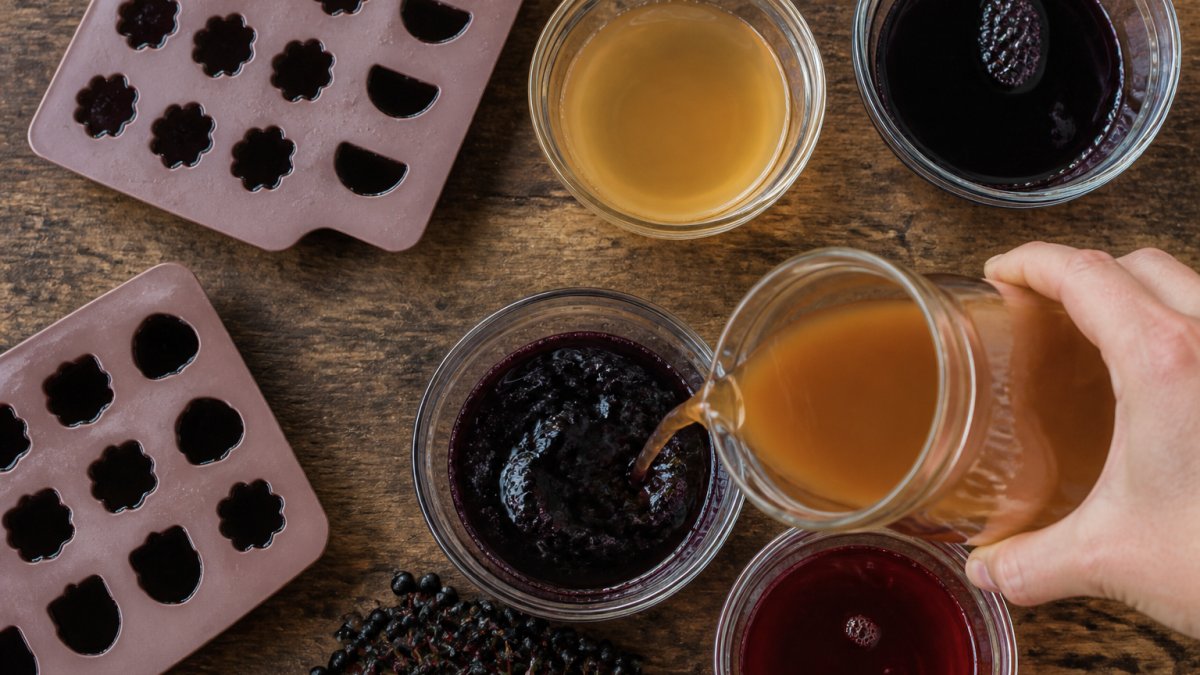
Start from a finished elderberry syrup, then replace part of the liquid with juice. Keep the total liquid the same so your gelling agent still works. That single rule prevents most texture problems.
A Structured Flavor-Variation Guide
Most recipes mention a juice or two in passing. A better approach is to group juices by role, then combine one from each group, the method we use when testing new batches, and it keeps results predictable. For more tested kitchen recipes and guides, browse the Kitchen Guides.
| Flavor Group | Examples | Role in the Gummy | Starting Ratio (juice to syrup) |
|---|---|---|---|
| Tart and bright | Pomegranate, cranberry, tart cherry, lime | Cuts earthiness, adds adult depth | 1 part to 3 parts |
| Mild and sweet | Apple, pear, white grape | Softens tartness, kid-friendly | 1 part to 2 parts |
| Rounded and deep | Concord grape, blueberry, blackberry | Masks strong elderberry, adds body | 1 part to 3 parts |
| Warm and spiced | Ginger, cinnamon, clove (steeped, not juiced) | Adds finish and warmth | 1 small knob or 1/4 tsp ground to a small batch |
A reliable small batch uses one tart or rounded juice plus a small amount of warm spice. For example: 3 parts syrup, 1 part pomegranate juice, and a thin slice of fresh ginger steeped ten minutes.
Balancing Sweetness, Tartness, and Elderberry Intensity
Elderberry syrup can taste strong, flat, or too tart depending on the berries and cook time. Juice blends let you correct each problem without dumping in more honey.
- Too strong or earthy: add a rounded juice like grape or blueberry at 1 part to 3 parts syrup. These soften the edge without hiding the berry.
- Too tart: add a mild sweet juice like apple or pear at 1 part to 2 parts syrup. Taste before adding honey; juice brings sweetness and liquid together.
- Too flat: add a tart juice like pomegranate or a squeeze of lemon at 1 part to 4 parts syrup. Brightness makes the elderberry taste more like itself.
Start with a 3:1 syrup-to-juice ratio, taste, then adjust by small spoonfuls. Write down what you changed so the next batch starts from a known point.
How Juice Additions Affect Setting and Texture
Juice is mostly water, so replacing syrup with juice changes water content and acidity. Both can affect gelling.
- Acidic juices like pomegranate, cranberry, and lemon can weaken gelatin if used in large amounts and can speed up pectin breakdown. Keep acidic juice at 1 part to 3 parts syrup or less, and don't exceed the total liquid your recipe calls for.
- Low-acid, sweet juices like apple and grape are gentler on setting agents. They may make the gummy slightly softer because of their sugar content, so expect a softer chew or add a little more gelling agent.
- Total liquid rule: if you add 1/4 cup of juice, remove 1/4 cup of the liquid already in the recipe. This keeps the gelling agent working as intended.
If a juice-heavy batch turns out too soft, reheat gently and add a little extra gelling agent rather than more juice. If too firm, a splash of juice or water and a gentle reheat will loosen it.
Use 100% juice, not juice drinks with added sugar and flavoring.
Elderberry Gummies with Lemon and Ginger
Lemon and ginger is the combination we reach for most often. Lemon brings brightness and cuts the earthy note. Growing Lemon Balm is a natural complement to lemon and ginger flavors. Readers interested in the medicinal side of elderberry and ginger can explore the Apothecary Guides.
For a small batch, use the juice of half a lemon and a small knob of fresh ginger, grated and steeped in the warm syrup for ten minutes. Strain the ginger out before adding your gelling agent. Leaving it in gives a grainy texture.
Dried ground ginger works too, but use less. A quarter teaspoon in a small batch is plenty. Fresh ginger is brighter and worth the extra step.
Gelatin-Free Elderberry Gummies: Agar and Other Setting Agents
Gelatin-free elderberry gummies rely on agar, pectin, or a starch base instead of animal gelatin. Agar is the most reliable swap.
The trade-off is texture. Agar gummies are firmer and slightly brittle compared to gelatin's soft chew.
Pectin gives a softer, jelly-like result and works best with extra sugar. It's fussy about acidity, so it pairs well with lemon-heavy batches.
Matching Setting Agents to Flavor Choices
Flavor additions behave differently depending on which setting agent you use. This is the part most recipes skip, and it's where gelatin-free batches quietly fail.
| Setting Agent | Best With | Watch Out For | Texture |
|---|---|---|---|
| Agar | Juice-heavy mixes, tart juices, warm spices | Needs a full boil; sets quickly as it cools | Firm, slightly brittle |
| Pectin | Lemon and other acidic juices, sweet fruit juices | Needs enough sugar and acidity to set | Softer, jelly-like |
| Starch | Mild, low-acid juices | Can turn grainy or cloudy | Least predictable |
A few practical notes for gelatin-free batches:
- Boil the agar mixture for the time your package states, or it won't set
- Whisk constantly to avoid clumps
- Pour into molds quickly, since agar starts setting as it cools
- Skip the freezer; chill in the fridge instead
Allergen-Aware and Dietary Flavor Options
Flavor choices and setting agents both affect who can eat the batch. A few swaps cover most dietary needs.
- Honey-free: replace honey with unrefined sugar, maple syrup, or a mild fruit juice. Adjust the total liquid if you use juice.
- Common fruit juice alternatives: if apple, grape, or pomegranate don't work for your household, try pear, blueberry, or tart cherry. Keep the same ratio groups so the balance stays predictable.
- Gelatin-free: agar is the safest starting point. Pectin works for softer gummies but needs more sugar and acidity. Starch is the least predictable.
- Vegan setting agents: agar and pectin are plant-based. Check that your sugar and juice are vegan-friendly if that matters to you.
For anyone avoiding gelatin, agar is the safest starting point. Test one small batch before scaling up, and note which setting agent and flavor combination worked so you can repeat it.
How Flavor Choices Affect Set, Texture, and Storage
Acidic juices like lemon and pomegranate can weaken gelatin if you use too much, and they speed up pectin breakdown.
Sugar level matters too. More honey or sugar means a softer set, because sugar interferes with gelling.
For storage, keep gummies in a sealed container in the fridge. Readers thinking about storage and preserving their gummies can find Preserve Guides.
Troubleshooting Flavors That Turn Out Too Tart or Too Soft
Too tart? Add a small amount of apple juice or a little honey to the warm mix.
Too soft? Add more gelling agent and reheat.
Too firm? Add a splash of juice or water and reheat gently.
Flavor tastes flat? Add a squeeze of lemon or a pinch of salt.
Grainy texture? Strain your ginger, and whisk your gelling agent fully before pouring.
A few habits prevent most of these issues:
- Taste the warm mix before pouring
- Keep total liquid consistent between batches
- Note what you changed on your recipe card
Start Your First Small Batch with Herban Root and Remedy
The best flavor is the one your family finishes. Start with one combination, note what you changed, and let the next batch build on it.
Herban Root and Remedy is built for exactly this kind of kitchen work.
No ads, no tracking, no corporate filler. Just the knowledge, passed between generations, in one place.
Join the community and start your first chemical-free elderberry batch this week.
Frequently Asked Questions
What flavors complement elderberry best?
Elderberry's deep, tart berry flavor pairs well with bright citrus like lemon and orange, warm spices such as ginger and cinnamon, and sweeter fruit juices like apple, grape, and pomegranate. These additions balance the tartness without masking the elderberry itself. A good starting point is one part lemon juice to three parts elderberry base for a gentle citrus lift, or a teaspoon of grated ginger per cup of syrup for warmth. Taste your base before adding sweetener so you can adjust gradually rather than overcorrecting.
Can you make elderberry gummies without gelatin?
Yes. Agar powder is the most reliable gelatin-free setting agent for elderberry gummies, and it works well in fruit juice blends. Use roughly one teaspoon of agar powder per cup of liquid, bring the mixture to a full boil for one to two minutes while stirring, then pour into molds and chill. Agar sets firmer and faster than gelatin, so work quickly. Pectin is another option but needs more sugar to gel properly, which changes the flavor balance. Always test a small batch first to confirm the texture suits your family.
How do you fix elderberry gummies that taste too tart?
Tartness usually comes from the elderberry base itself or from added citrus and pomegranate juice. Add honey or unrefined sugar a tablespoon at a time, tasting between additions, until the edge softens. A pinch of cinnamon or a small amount of apple juice can round out sharp notes without making the batch overly sweet. If you have already set the gummies, a tart batch still works well rolled in a light dusting of fine sugar. Next time, reduce the lemon juice by half and increase the sweeter juice in your blend.
How should homemade elderberry gummies be stored?
Store set gummies in an airtight container in the refrigerator, where they typically keep for about two weeks. Layer them with parchment paper if they tend to stick. For longer storage, freeze them on a tray first, then transfer to a freezer bag for up to three months and thaw in the fridge overnight. Because homemade gummies contain no chemical preservatives, refrigeration is essential. Label each batch with the date and the flavor blend so you can track which ratios your family preferred.
