blog
Chicken and Casserole Recipes: 12 Cozy Dinners
Table of Contents
- Why Chicken Casseroles Belong in Your Weeknight Rotation
- How to Choose a Chicken Casserole Recipe (Comparison Table)
- Classic Creamy Chicken Casseroles: Comfort Food Done Right
- Chicken and Rice Casserole: One-Dish Meals That Feed a Crowd
- Chicken and Potato Casserole: Hearty Bakes for Cold Evenings
- Healthy Chicken Casserole Recipes: Vegetable-Packed and Whole-Food
- Make-Ahead Chicken Casserole: Freezer, Fridge, and Reheating Guide
- Conclusion: Your Next Cozy Chicken Dinner
- Frequently Asked Questions
Last Updated: October 6, 2026
Why Chicken Casseroles Belong in Your Weeknight Rotation
Chicken and casserole recipes solve a problem every home cook knows: dinner has to be fast, filling, and made from food you can actually pronounce. A chicken casserole is a one-dish meal where chicken, a sauce, and a starch or vegetable bake together in a single pan. Most go from counter to table in under an hour. You get one pan to wash instead of four.
The real appeal is flexibility. A weeknight meal built on chicken breast or chicken thighs stretches across days and feeds a family without a second trip to the store.
- One-dish meal means less cleanup
- Simple ingredients you likely already have
- Easy to double for a crowd
- Works with fresh or frozen vegetables
That last point matters more than most guides admit. A casserole is forgiving in a way a roast chicken is not.
How to Choose a Chicken Casserole Recipe (Comparison Table)
Pick your recipe by what you have on hand, how much time you have, and what dietary needs you are cooking around. That single rule saves more weeknight dinners than any technique.
Use the table below to match your situation to a style. Prep time is hands-on minutes before baking; cook time is total oven time. Dietary tags are based on common ingredient swaps noted in the recipe sections below.
| If you want... | Choose this style | Prep time | Cook time | Servings | Dietary notes |
|---|---|---|---|---|---|
| Creamy comfort food | Cream of chicken base | 10 min | 45-55 min | 6 | Gluten-free with cornstarch; dairy-free with oat milk and dairy-free butter |
| A one-pan crowd feeder | Chicken and rice | 15 min | 50-60 min | 6-8 | Naturally gluten-free if using tamari; low-sodium with homemade broth |
| Something hearty | Chicken and potatoes | 20 min | 60-70 min | 6 | Dairy-free if using olive oil instead of cream; high-protein with extra chicken |
| Lighter fare | Vegetable-packed bake | 15 min | 40-50 min | 4-6 | Low-sodium with no-salt-added broth; gluten-free with almond flour thickener |
| Hands-off prep | Make-ahead freezer bake | 20 min (day before) | 0 min day-of | 6 | Freezer-friendly; thaw overnight for best texture |
A common mistake is choosing by flavor alone. Time and pan size decide whether dinner actually lands on the table. For example, a 9x13-inch pan holds most of these recipes, but a deep 8x8-inch pan works for half batches. If you are cooking for someone with celiac disease, use gluten-free tamari instead of soy sauce and thicken sauces with cornstarch or arrowroot rather than flour. For dairy-free needs, replace heavy cream with full-fat oat milk or coconut cream, and use dairy-free butter or olive oil in the roux. For low-sodium diets, make your own broth or choose no-salt-added versions, and skip added salt in the sauce. For high-protein goals, add an extra cup of diced chicken or swap rice for quinoa.
This table is a starting point, not a rulebook. The recipe sections below give exact ingredient lists and step-by-step instructions for each style, including the swaps mentioned here.
Classic Creamy Chicken Casseroles: Comfort Food Done Right
Creamy chicken casseroles are the heart of comfort cooking, and you do not need a can of soup to make one. A from-scratch base takes about ten minutes and tastes far better.
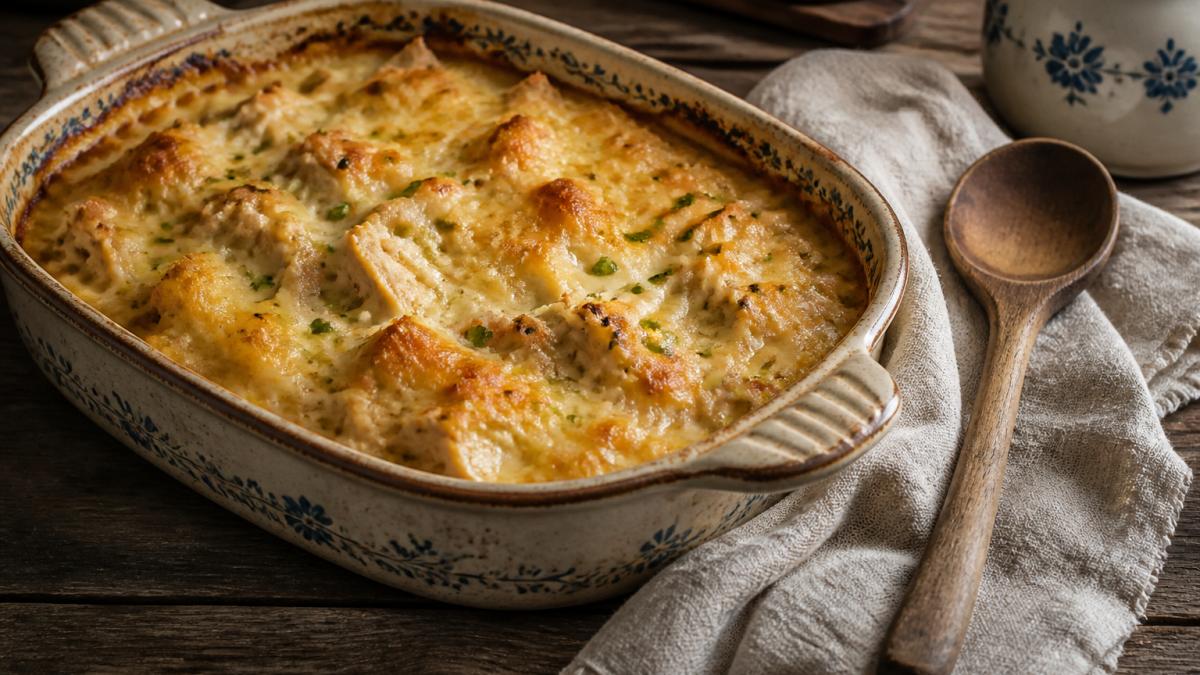
Cream of Chicken Soup From Scratch (No Cans Needed)
Melt butter, whisk in flour, then add broth and milk. Season with garlic and a pinch of salt. Simmer until thick, about five minutes. That is your cream of chicken soup, with no preservatives and no mystery ingredients. It is the base for most creamy bakes below.
Bacon Ranch Chicken Casserole
Layer cooked chicken, cooked bacon, and a ranch-seasoned cream sauce in a baking dish. Top with Cheddar cheese and bake at 190°C (375°F) for 25 minutes. The bacon adds smoke, the ranch adds tang, and the cheese holds it together.
Chicken and Rice Casserole: One-Dish Meals That Feed a Crowd
A chicken and rice casserole is the most economical bake in this list because rice stretches a little chicken a long way. One pan feeds six without doubling your grocery bill.
Teriyaki Chicken and Rice Bake
Stir teriyaki sauce through cooked rice and diced chicken. Add carrots and a little brown onion. Bake covered at 190°C (375°F) for 30 minutes, then uncovered for 10 more. The sauce caramelizes at the edges.
French Onion Chicken and Rice
Caramelize sliced onions slowly, then fold them into rice with chicken and a splash of broth. Top with Parmesan and bake until golden. It tastes like French onion soup turned into dinner.
Chicken and Potato Casserole: Hearty Bakes for Cold Evenings
A chicken and potato casserole is the heaviest, most filling option here, which makes it perfect for a cold night. Thinly sliced potatoes cook through in the same time as the chicken.
Sweet Potato and Chicken Bake
Cube sweet potato and toss with olive oil, garlic, and diced chicken. Bake at 200°C (400°F) for 35 minutes. The sweet potato softens into a natural sauce.
Creamy Potato and Chicken Casserole
Layer sliced potatoes, cooked chicken, and a sour cream and cream of chicken sauce. Bake covered for 45 minutes, then uncovered for 15. The top turns golden and the layers hold together when you serve.
Healthy Chicken Casserole Recipes: Vegetable-Packed and Whole-Food
Healthy chicken casserole recipes swap heavy cream for broth, yogurt, or tomato and load up on fresh vegetables. You keep the cozy texture without the heaviness.
Quinoa and Chicken Bake With Zucchini
Combine cooked quinoa, diced chicken, zucchini, and carrots in a baking dish. Pour over a light tomato or broth sauce and bake at 190°C (375°F) for 30 minutes. Quinoa adds protein and a nutty bite.
Butter Chicken Casserole With Cauliflower
Simmer chicken in a spiced tomato and yogurt sauce, then fold in cauliflower florets. Bake until the cauliflower is tender, about 25 minutes. Serve over rice or on its own.
For food safety and safe handling of raw chicken, follow the guidance from the USDA Food Safety and Inspection Service on cooking poultry to a safe internal temperature.
Make-Ahead Chicken Casserole: Freezer, Fridge, and Reheating Guide
A make-ahead chicken casserole is the single best way to protect a busy week. Assemble it on a Sunday, freeze it, and bake it straight from frozen on a Wednesday. But the difference between a casserole that reheats beautifully and one that turns dry or watery comes down to a few concrete steps.
Freezing and Thawing Instructions
- Cool the assembled casserole fully before freezing. A warm casserole creates ice crystals that break down texture.
- Wrap tightly with plastic wrap, then foil, or use a freezer-safe dish with a lid. Press out as much air as possible.
- Label with the date and freeze for up to three months. After that, quality drops even if safety holds.
- Thaw overnight in the fridge for best results. A 9x13-inch casserole typically needs 24 hours to thaw completely. If you bake from frozen, add 20-30 minutes to the original bake time and cover with foil for the first half.
Reheating Without Drying Out
Add a splash of broth or milk before reheating. Cover with foil and warm at 160°C (325°F) until heated through. The extra liquid replaces what the oven pulls out. For a single serving, microwave covered at 50% power in 1-minute intervals, stirring gently, until the center reaches 74°C (165°F).
Dietary Adaptations for Make-Ahead
- Gluten-free: Thicken sauces with cornstarch or arrowroot instead of flour. Use gluten-free tamari instead of soy sauce. Check that any cream of chicken soup substitute is gluten-free.
- Dairy-free: Replace heavy cream with full-fat oat milk or coconut cream. Use dairy-free butter or olive oil in the roux. For cheese toppings, use dairy-free shreds or omit and add a breadcrumb topping instead.
- Low-sodium: Make your own broth or use no-salt-added versions. Skip added salt in the sauce and season at the table. Choose low-sodium cheese if using.
- High-protein: Add an extra cup of diced chicken or swap rice for quinoa. Greek yogurt can replace sour cream for a protein boost.
Safe Storage and Leftovers
Cooked chicken casserole can be stored in the refrigerator for 3-4 days. Reheat only the portion you plan to eat. Never reheat a casserole more than once; each warm-up cycle pushes chicken past the safe zone. For safe storage times on cooked leftovers, check the FDA refrigerator and freezer storage chart.
For food safety and safe handling of raw chicken, follow the guidance from the USDA Food Safety and Inspection Service on cooking poultry to a safe internal temperature of 74°C (165°F).
Conclusion: Your Next Cozy Chicken Dinner
The hardest part of a weeknight meal is deciding what to make, not making it. Chicken and casserole recipes remove that decision by giving you one pan, simple ingredients, and a reliable result every time. Start with a creamy classic, then branch into rice, potato, or vegetable-packed versions as your confidence grows. If you want tested, scratch-made recipes with no ads and no chemicals, our homesteading resource library is where we keep them. Join the Homestead and cook closer to the land.
Frequently Asked Questions
How do you keep chicken casserole from drying out?
The key is moisture and temperature control. Use a creamy sauce, broth, or sour cream base to keep the chicken tender. Cover the dish with foil for the first 25-30 minutes of baking, then uncover for the last 10-15 minutes to let the top brown. Cook at 180°C (350°F) and check that the internal temperature of the chicken reaches 74°C (165°F). If you are using pre-cooked chicken, reduce the total bake time by 10 minutes to avoid overcooking.
Can you make chicken casserole ahead of time?
Yes. Assemble the casserole up to 24 hours in advance, cover tightly, and store it in the refrigerator. When you are ready to bake, add 10-15 extra minutes to the cooking time because the dish starts cold. For longer storage, freeze the unbaked casserole for up to 3 months. Thaw overnight in the fridge before baking. This make-ahead approach works especially well for chicken and rice casserole and chicken and potato casserole recipes.
How long should chicken casserole bake?
Most chicken casseroles bake at 180°C (350°F) for 30-45 minutes if the chicken is pre-cooked, or 45-60 minutes if using raw chicken pieces. Always check that the chicken reaches 74°C (165°F) internally. Casseroles with raw rice or potatoes need the longer end of that range, while a fully cooked filling just needs to heat through and bubble at the edges.
Can you freeze chicken casserole?
Freezing works best with unbaked casseroles. Assemble the dish, wrap it tightly with foil or freezer wrap, and freeze for up to 3 months. Baked casseroles can also be frozen, but the texture of creamy sauces may change slightly. Thaw overnight in the refrigerator, then bake as directed, adding 10-15 minutes to the time. Avoid freezing casseroles topped with crunchy breadcrumbs or fried onions, as they lose their crispness.